Modern healthcare depends on much more than doctors and hospitals. Behind every medicine, vaccine, diagnostic test, medical device, and therapeutic treatment is a large network of pharmacists, biomedical scientists, researchers, laboratory professionals, engineers, clinical researchers, and pharmaceutical specialists.
Pharmacy and Biomedical Sciences are ideal fields for students who are fascinated by biology and chemistry and want to understand diseases at the cellular and molecular level. These disciplines contribute to the discovery, development, testing, manufacturing, and safe use of medicines and healthcare technologies.
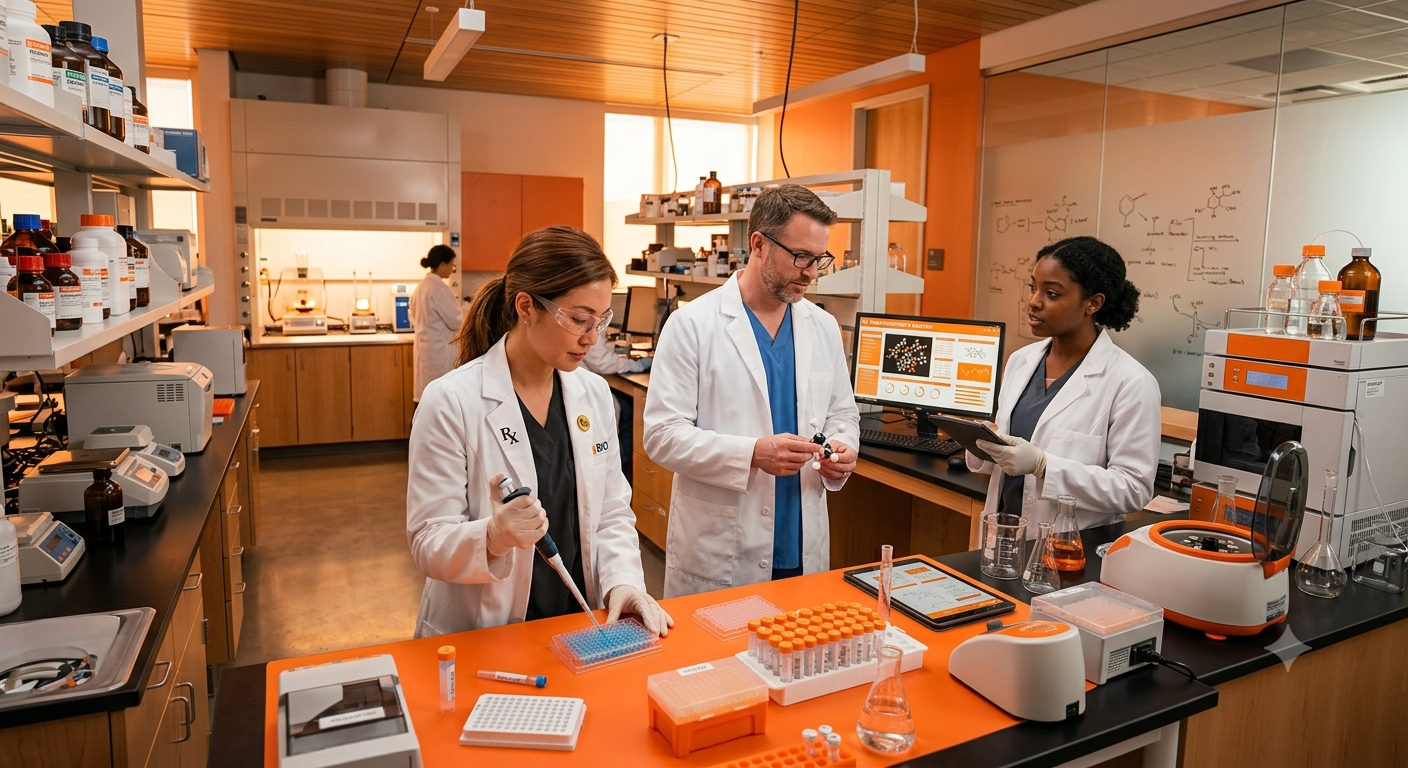
From developing vaccines and cancer therapies to studying genetics, designing drug delivery systems, analyzing biological samples, and improving medical diagnostics, professionals in this field contribute to healthcare largely through research, laboratories, pharmaceutical companies, hospitals, and biotechnology organizations.
What are Pharmacy and Biomedical Sciences?
Pharmacy is a healthcare and pharmaceutical discipline concerned with medicines, including their discovery, formulation, manufacturing, quality, safety, effectiveness, and appropriate use. Pharmacists can work in community pharmacies, hospitals, pharmaceutical companies, regulatory organizations, research laboratories, and clinical settings.
Biomedical Science is a research-oriented field that investigates how the human body functions and what happens when biological systems become abnormal or diseased. It draws heavily from biology, biochemistry, genetics, microbiology, molecular biology, physiology, and related disciplines.
Although the two fields overlap, they are not identical. Pharmacy is strongly connected to medicines and their use, while biomedical science focuses more broadly on understanding biological processes and disease mechanisms.
Major Areas of Pharmacy
Pharmacy is a broad discipline with opportunities extending far beyond working in a retail medical store. Students can specialize in pharmaceutical research, manufacturing, clinical services, regulatory affairs, quality management, or pharmaceutical business.
Major areas include:
- Pharmaceutics and Drug Formulation
- Pharmacology
- Pharmaceutical Chemistry
- Pharmacognosy
- Clinical Pharmacy
- Hospital Pharmacy
- Industrial Pharmacy
- Pharmaceutical Biotechnology
- Regulatory Affairs
- Pharmacovigilance
- Quality Control
- Quality Assurance
- Drug Discovery and Development
- Clinical Research
Major Areas of Biomedical Science
Biomedical science covers the biological mechanisms behind health and disease. Professionals may work at the molecular, cellular, tissue, organ, or population level depending on their specialization.
Important areas include:
- Molecular Biology
- Cell Biology
- Genetics
- Genomics
- Microbiology
- Immunology
- Biochemistry
- Neuroscience
- Cancer Biology
- Stem Cell Research
- Developmental Biology
- Pathology
- Bioinformatics
- Biomedical Research
The growing connection between biology, medicine, computing, and engineering has also created interdisciplinary areas such as computational biology, bioinformatics, biomedical engineering, precision medicine, regenerative medicine, and biotechnology.
Career Opportunities
Pharmacy and biomedical sciences offer careers across pharmaceutical companies, biotechnology firms, hospitals, diagnostic laboratories, universities, research institutions, contract research organizations, government laboratories, and healthcare companies.
Popular career options include:
- Clinical Pharmacist
- Hospital Pharmacist
- Drug Research Scientist
- Pharmaceutical R&D Scientist
- Biomedical Scientist
- Biomedical Researcher
- Clinical Research Associate
- Clinical Trial Coordinator
- Pharmacovigilance Associate
- Regulatory Affairs Specialist
- Quality Control Analyst
- Quality Assurance Specialist
- Medical Laboratory Scientist
- Geneticist
- Molecular Biologist
- Microbiologist
- Toxicologist
- Biotechnology Researcher
- Bioinformatics Analyst
- Medical Device Researcher

The best career path depends on whether you prefer patient-facing healthcare, laboratory research, pharmaceutical manufacturing, data analysis, regulatory work, or product development. A pharmacy graduate can therefore build a career in both healthcare and the pharmaceutical industry.
Career Pathway
Students generally begin with a strong foundation in Physics, Chemistry, Biology, and related sciences during school. The undergraduate degree then determines the direction of their professional journey.
A common pathway for pharmacy is:
For students interested primarily in biomedical research, a common route is:
Courses You Can Pursue
Students can choose different degrees depending on whether they want to focus on pharmacy, biomedical research, biotechnology, laboratory science, or pharmaceutical management.
Relevant programs include:
- B.Pharm
- D.Pharm
- B.Sc Biotechnology
- B.Sc Biomedical Science
- B.Sc Biochemistry
- B.Sc Microbiology
- B.Sc Life Sciences
- B.Tech Biotechnology
- B.Tech Biomedical Engineering
- M.Pharm
- M.Sc Biotechnology
- M.Sc Biomedical Science
- M.Sc Biochemistry
- M.Sc Microbiology
- M.Sc Molecular Biology
- M.Sc Genetics
- M.Sc Bioinformatics
- PhD in Pharmaceutical Sciences
- PhD in Biomedical Sciences
- PhD in Biotechnology / Life Sciences
Students interested in becoming practicing pharmacists should carefully check the current regulatory and registration requirements applicable to pharmacy practice in India. Research-oriented careers may require postgraduate education and, for advanced academic and scientific positions, doctoral training.
Drug Discovery & Development
Drug discovery is one of the most research-intensive areas within pharmaceutical and biomedical science. Scientists begin by studying a disease and identifying biological pathways, molecules, proteins, or targets that may be involved in the disease process.
Potential drug candidates then go through extensive laboratory research to understand their effectiveness, toxicity, stability, and mechanism of action. Promising candidates may eventually move into preclinical and clinical development.
Professionals involved in drug development can work in:
- Target Identification
- Molecular Biology
- Medicinal Chemistry
- Pharmacology
- Toxicology
- Preclinical Research
- Clinical Research
- Drug Formulation
- Pharmaceutical Manufacturing
- Regulatory Affairs
Clinical Trials & Clinical Research
Before new medicines and therapies can be widely used, they must undergo extensive evaluation for safety and effectiveness. Clinical research involves the systematic study of treatments and healthcare interventions under controlled conditions and according to established ethical and regulatory requirements.
Clinical research professionals may coordinate studies, maintain documentation, communicate with research sites, monitor trial activities, manage data, and support regulatory compliance.
Popular roles include:
- Clinical Research Associate
- Clinical Trial Coordinator
- Clinical Data Manager
- Clinical Research Scientist
- Regulatory Affairs Associate
- Medical Research Coordinator
- Pharmacovigilance Associate
Pharmacovigilance
Pharmacovigilance focuses on monitoring and evaluating the safety of medicines after they are introduced into use. Professionals analyze information about suspected adverse reactions and help organizations identify, evaluate, and manage potential medicine-related risks.
This area is particularly suitable for students who enjoy scientific analysis, documentation, medicine safety, and regulatory processes.
Career roles include:
- Drug Safety Associate
- Pharmacovigilance Associate
- Drug Safety Scientist
- Safety Data Analyst
- Medical Reviewer
- Pharmacovigilance Manager
Biomedical Research
Biomedical research investigates the biological mechanisms underlying diseases and health conditions. Researchers may study cells, genes, proteins, microorganisms, tissues, immune responses, or disease pathways to understand why diseases develop and how they can be prevented or treated.
Research may be conducted in universities, government laboratories, hospitals, biotechnology companies, pharmaceutical organizations, and specialized research institutes.
Biomedical researchers can specialize in areas such as:
- Cancer Research
- Genetics
- Immunology
- Infectious Diseases
- Neuroscience
- Regenerative Medicine
- Stem Cell Biology
- Molecular Biology
- Cell Signaling
- Genomics
- Drug Discovery
Genetics & Genomics
Advances in genetics and genomics are transforming how scientists understand disease. Researchers can study genetic variations, mutations, gene expression, and interactions between genes and the environment.
These developments are contributing to areas such as genetic disease research, cancer biology, personalized medicine, and biotechnology.
Students interested in genetics can explore careers as genetic researchers, molecular biologists, genomics analysts, bioinformatics professionals, and biotechnology scientists.
Biotechnology & Pharmaceutical Innovation
Biotechnology uses biological systems, cells, organisms, or biological molecules to develop products and technologies. Modern pharmaceutical research increasingly depends on biotechnology for areas such as biologics, vaccines, advanced therapies, and molecular diagnostics.
This creates opportunities for professionals who understand both biological science and technological applications.
Important areas include:
- Biopharmaceuticals
- Vaccine Development
- Molecular Diagnostics
- Recombinant Technology
- Cell-Based Therapies
- Gene-Based Technologies
- Bioprocessing
- Industrial Biotechnology
- Bioinformatics
- Biological Drug Manufacturing
Top Institutes in India
India has several institutions known for pharmaceutical sciences, biomedical research, biotechnology, medicine, and life sciences.
Some prominent options include:
- National Institute of Pharmaceutical Education and Research (NIPER)
- Jamia Hamdard, New Delhi
- Institute of Chemical Technology (ICT), Mumbai
- Manipal College of Pharmaceutical Sciences
- Indian Institute of Science (IISc), Bengaluru
- All India Institute of Medical Sciences (AIIMS)
- Indian Institutes of Technology (IITs)
- National Institute of Science Education and Research (NISER)
- Indian Institutes of Science Education and Research (IISERs)
- Jawaharlal Nehru University (JNU)
When choosing an institute, students should consider the specific course rather than relying only on the institution's overall reputation. Research facilities, laboratory infrastructure, faculty expertise, internships, industry collaborations, and postgraduate opportunities can be especially important for research-oriented careers.
Pharmaceutical Industry Careers
India has a large pharmaceutical industry covering drug manufacturing, generic medicines, formulations, biotechnology, contract research, clinical development, quality management, and pharmaceutical exports.
Pharmacy and biomedical graduates can therefore enter several parts of the pharmaceutical value chain.
Major industry functions include:
- Research & Development
- Production and Manufacturing
- Quality Control
- Quality Assurance
- Regulatory Affairs
- Clinical Research
- Pharmacovigilance
- Medical Affairs
- Drug Safety
- Pharmaceutical Marketing
- Supply Chain
- Business Development
Quality Control & Quality Assurance
Pharmaceutical products must meet strict quality standards because variations in composition, purity, stability, or manufacturing processes can affect product safety and effectiveness.
Quality Control professionals perform laboratory testing and analysis, while Quality Assurance professionals focus more broadly on systems, procedures, documentation, compliance, and maintaining consistent manufacturing standards.
These areas are particularly suitable for students who are detail-oriented and comfortable working with laboratory procedures, documentation, and regulatory requirements.
Regulatory Affairs
Pharmaceutical and biotechnology companies must meet extensive regulatory requirements before and after healthcare products reach the market. Regulatory professionals help organizations prepare documentation, communicate with regulatory authorities, interpret requirements, and maintain compliance.
Regulatory affairs is a good option for students who enjoy science but also have strong documentation, communication, analytical, and organizational skills.
Medical Laboratory & Diagnostics
Biomedical science is also closely connected to diagnostic medicine. Laboratory professionals analyze biological samples and generate information that can help healthcare professionals understand diseases and monitor patient conditions.
Diagnostic science includes areas such as:
- Clinical Biochemistry
- Hematology
- Microbiology
- Immunology
- Molecular Diagnostics
- Genetic Testing
- Pathology
- Clinical Laboratory Science
Skills Required
Pharmacy and biomedical careers require a combination of scientific knowledge, laboratory discipline, analytical thinking, and attention to detail. Research can be highly methodical and may require repeating experiments many times before obtaining useful results.
Important skills include:
- Strong foundation in biology and chemistry
- Laboratory and experimental skills
- Analytical thinking
- Attention to detail
- Scientific reasoning
- Data interpretation
- Problem-solving
- Research methodology
- Technical documentation
- Scientific communication
- Patience and persistence
- Understanding of laboratory safety
- Statistical skills
- Teamwork and collaboration
Students interested in advanced biomedical research can also benefit from learning statistics, programming, data analysis, bioinformatics, and scientific visualization. These skills are becoming increasingly important as biological research generates larger and more complex datasets.
Research Skills & Laboratory Experience
Classroom knowledge alone is often not enough for students planning research careers. Practical laboratory exposure helps students understand how experiments are designed, conducted, documented, analyzed, and interpreted.
Students can develop research experience through:
- Laboratory internships
- Research projects
- Summer research programs
- University laboratories
- Industry internships
- Clinical research projects
- Academic publications
- Scientific conferences
- Research assistant positions
Salary Range in India
Salaries vary significantly depending on qualification, specialization, employer, location, research experience, and whether the role is in healthcare, manufacturing, research, biotechnology, or management.
Indicative career ranges include:
- Clinical Pharmacist / Laboratory Professional — ₹3–5 LPA
- Pharmaceutical QC Analyst — ₹4–7 LPA
- Regulatory Affairs Associate — ₹5–9 LPA
- Clinical Research Associate — ₹5–10 LPA
- Pharmacovigilance Professional — ₹5–10 LPA
- Pharmaceutical R&D Scientist — ₹7–15 LPA
- Biomedical Researcher — ₹5–12 LPA
- Senior R&D Scientist — ₹10–20+ LPA
- Specialized Research / Biotechnology Professional — ₹10–25+ LPA
Professionals with postgraduate degrees, doctoral qualifications, specialized technical skills, strong research experience, or management expertise can progress into senior scientific, managerial, regulatory, and research leadership positions.
Higher Studies & Research
Students who want to pursue advanced research should consider postgraduate and doctoral education. A Master's degree can provide deeper specialization, while a PhD is often important for independent research and academic scientific careers.
Higher studies can lead to specializations in:
- Pharmaceutical Sciences
- Pharmacology
- Pharmaceutics
- Medicinal Chemistry
- Biotechnology
- Molecular Biology
- Genetics
- Microbiology
- Biochemistry
- Bioinformatics
- Biomedical Sciences
- Clinical Research
- Cancer Biology
- Neuroscience
Future Scope
The future of pharmacy and biomedical science is increasingly connected to precision medicine, biotechnology, genetics, artificial intelligence, advanced diagnostics, and data-driven healthcare.
Personalized medicine aims to use information about an individual's biology and genetics to improve prevention, diagnosis, and treatment strategies. Advances in genomics and molecular diagnostics are making it increasingly possible to understand diseases at a highly detailed level.
Other rapidly developing areas include gene-based technologies, regenerative medicine, immunotherapy, biologics, advanced drug delivery systems, computational drug discovery, and biomedical data science.
Artificial Intelligence in Drug Discovery
Artificial intelligence and machine learning are increasingly being explored in pharmaceutical research. Computational tools can help researchers analyze biological datasets, identify potential drug targets, predict molecular properties, and prioritize compounds for further investigation.
This does not replace laboratory science. Instead, computational methods can complement experimental research by helping scientists process large amounts of information and identify promising directions more efficiently.
Students who combine pharmaceutical or biomedical knowledge with programming, statistics, and machine learning can therefore explore emerging interdisciplinary career paths.
Personalized Medicine
Traditional medical treatment often relies on approaches that work for large groups of patients. Personalized medicine seeks to account for differences between individuals, including genetic, molecular, environmental, and lifestyle factors.
Biomedical researchers and pharmaceutical scientists are contributing to this field by studying biomarkers, genetic variation, disease mechanisms, and treatment responses.
This area is expected to remain important as healthcare becomes increasingly data-driven and biologically precise.
Challenges in the Field
Although pharmacy and biomedical sciences offer exciting opportunities, students should understand that research careers can be demanding. Scientific discoveries often require years of experimentation, validation, regulatory review, and clinical evaluation.
Research projects can also involve failed experiments, uncertain outcomes, long development timelines, and highly competitive academic environments.
Students who choose this path should therefore be comfortable with patience, continuous learning, technical complexity, and evidence-based decision-making.
Is this the Right Career for You?
Pharmacy and Biomedical Sciences can be an excellent choice if you are fascinated by biology and chemistry and want to understand how medicines, diseases, cells, genes, and biological systems work.
You may enjoy this field if you:
- Love biology and chemistry
- Enjoy laboratory experiments
- Are curious about how medicines work
- Like solving scientific problems
- Have strong attention to detail
- Enjoy research and experimentation
- Are comfortable working with data
- Have patience for long-term projects
- Want to contribute to healthcare innovation
- Prefer scientific or laboratory work over constant patient interaction
The field may be less suitable if you dislike laboratory work, scientific documentation, repetitive experiments, or subjects that require strong foundations in chemistry, biology, and quantitative reasoning.
Final Thoughts
Pharmacy and Biomedical Sciences sit at the intersection of medicine, biology, chemistry, technology, and research. Professionals in these fields contribute to healthcare in ways that may happen far away from the hospital bedside but can ultimately affect millions of patients.
Whether you choose pharmacy practice, pharmaceutical research, clinical trials, biotechnology, genetics, biomedical research, regulatory affairs, pharmacovigilance, or diagnostics, the field offers multiple routes to build a meaningful scientific career.
For students who are naturally curious, methodical, patient, and passionate about discovering how biological systems work, Pharmacy and Biomedical Sciences can provide an intellectually challenging and highly relevant career path.
As healthcare moves toward more personalized treatments, advanced biotechnology, data-driven drug discovery, and precision diagnostics, professionals who can connect fundamental science with practical healthcare applications will continue to play an important role in the future of medicine.