Every city depends on buildings, roads, bridges, transport systems, housing, commercial spaces, utilities, and other infrastructure. As populations grow and cities expand, the demand for well-planned real estate and large-scale infrastructure continues to increase.
Real Estate & Infrastructure is a multidisciplinary career field that combines construction, engineering, finance, management, architecture, urban planning, law, marketing, investment, and technology. Professionals in this sector help transform land and ideas into homes, offices, industrial facilities, highways, airports, transport networks, and entire urban developments.
The sector is particularly attractive for students who want to work on tangible projects while also being involved in business strategy, investment decisions, project execution, and urban development.
What is Real Estate & Infrastructure?
Real estate involves the development, purchase, sale, leasing, management, and investment of land and buildings. It covers residential properties such as apartments and housing projects, commercial properties such as offices and shopping centres, industrial properties such as warehouses and manufacturing facilities, and specialized developments such as hotels and mixed-use projects.
Infrastructure refers to the physical systems and facilities that allow cities, industries, and economies to function. This includes roads, highways, bridges, railways, airports, ports, water systems, energy infrastructure, public transportation, telecommunications networks, and other essential facilities.
The two areas are closely connected. A new residential or commercial development requires roads, utilities, transportation, water supply, electricity, and other infrastructure. Similarly, new infrastructure can increase the economic value and development potential of surrounding land.
What Does a Real Estate Professional Do?
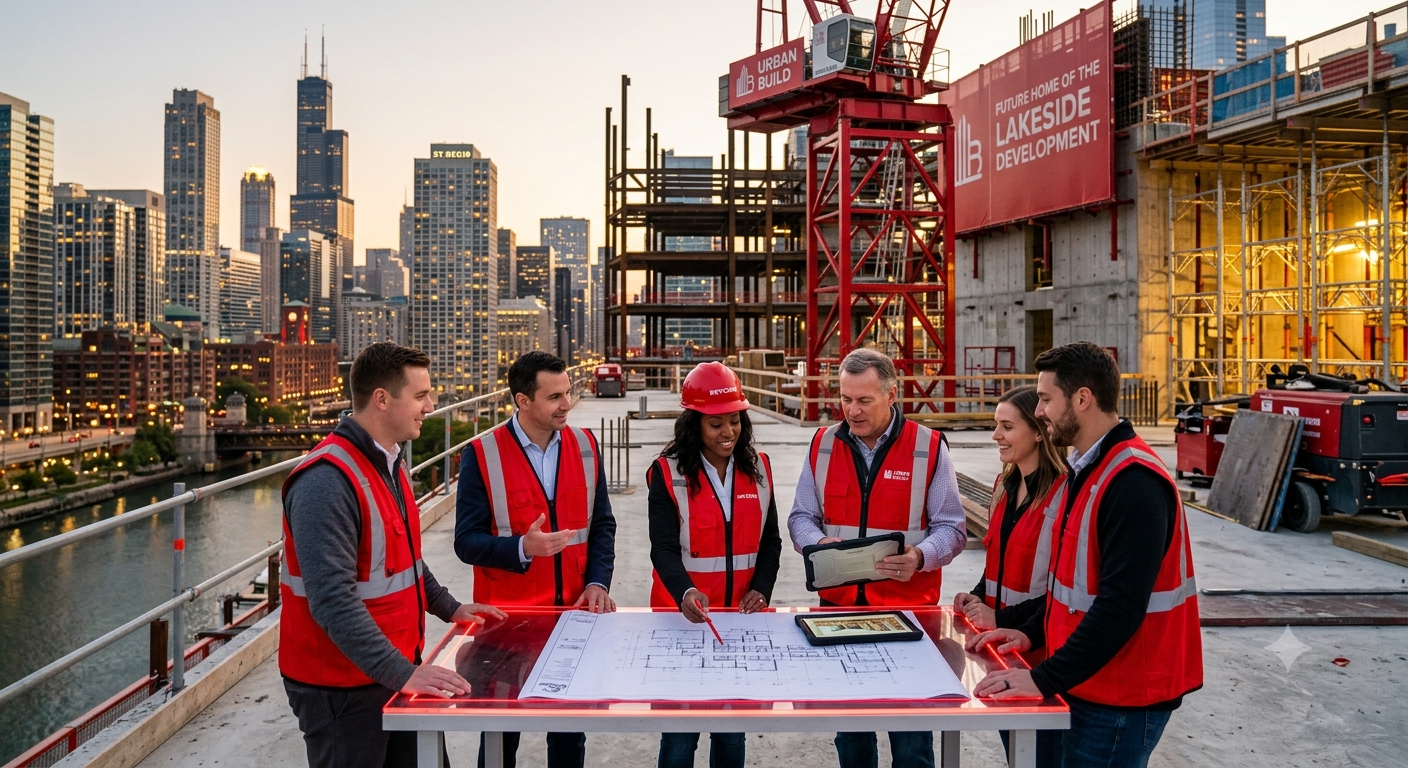
Real estate professionals can work across development, investment, sales, consulting, property management, valuation, and asset management. Their responsibilities depend on their specialization and the type of organization they work for.
Typical responsibilities may include:
- Identifying potential development opportunities
- Evaluating land and property investments
- Conducting market and feasibility studies
- Managing property acquisition and development
- Preparing project budgets and financial plans
- Coordinating architects, engineers and contractors
- Managing property sales and leasing
- Monitoring construction and project timelines
- Managing commercial and residential properties
- Analyzing real estate market trends
- Evaluating investment returns and risks
- Maintaining relationships with investors and stakeholders
Real estate development is highly collaborative. Developers and managers often work with architects, civil engineers, contractors, lawyers, financial institutions, government authorities, consultants, brokers, investors, and customers throughout the lifecycle of a project.
What Does an Infrastructure Professional Do?
Infrastructure professionals work on projects that require significant investment, technical expertise, planning, and coordination. These projects can take several years to design, finance, construct, operate, and maintain.
Their work may include:
- Planning highways and transportation networks
- Managing large construction projects
- Developing infrastructure feasibility studies
- Preparing project schedules and budgets
- Coordinating engineering and construction teams
- Monitoring quality, safety and project progress
- Managing contractors and suppliers
- Evaluating infrastructure investments
- Supporting public-private partnership projects
- Analyzing project risks and financial viability
- Monitoring infrastructure assets after completion
Major Areas of Real Estate & Infrastructure
The sector offers several specializations, allowing students to choose careers based on whether they prefer construction, business, finance, planning, technology, or property operations.
Major areas include:
- Residential Real Estate — housing and residential developments
- Commercial Real Estate — offices, retail and business properties
- Industrial Real Estate — warehouses, logistics and industrial facilities
- Real Estate Investment — property funds, investment analysis and asset management
- Construction Management — planning and execution of construction projects
- Infrastructure Development — roads, railways, airports, utilities and public infrastructure
- Urban Planning — planning cities, communities and land use
- Property Management — managing buildings, facilities and tenant relationships
- Real Estate Valuation — determining the value of properties and assets
- Real Estate Finance — funding, investment and financial modelling
- Infrastructure Finance — financing large-scale public and private projects
- PropTech — technology-driven real estate services and platforms
- Sustainable Development — energy-efficient and environmentally responsible projects
Career Pathway
There is no single educational route into Real Estate & Infrastructure. Students can enter the sector through engineering, architecture, planning, commerce, management, economics, finance, or other related disciplines.
A common pathway for technical careers is:
Students interested in the business side of the sector may choose management, finance, economics, or commerce at the undergraduate level and later specialize through an MBA or a specialized postgraduate program.
Students interested in technical project execution may prefer Civil Engineering, Architecture, Construction Management, or Planning before moving into management and leadership roles.
Popular Courses
Students can choose from a wide range of undergraduate and postgraduate programs depending on their preferred specialization.
Popular courses include:
- B.Tech / B.E. in Civil Engineering
- B.Arch — Bachelor of Architecture
- B.Plan — Bachelor of Planning
- BBA in Real Estate Management
- B.Com with Finance or Management specialization
- B.Sc. in Construction-related disciplines
- MBA in Real Estate Management
- MBA in Infrastructure Management
- MBA in Finance
- M.Plan — Urban and Regional Planning
- M.Tech in Construction Management
- M.Tech in Infrastructure Engineering
- Postgraduate programs in Real Estate and Property Management
- Specialized programs in Construction Project Management
The ideal course depends on the student's intended career. Civil Engineering is useful for technical construction roles, Architecture and Planning are suitable for design and urban development, while Management and Finance can lead toward investment, development, sales, consulting, and business strategy.
Entrance Exams
Admission requirements vary according to the course and institution. Students should always verify the latest eligibility requirements before applying.
Common entrance routes include:
- JEE Main — for engineering programs at participating institutions
- JEE Advanced — for undergraduate programs at IITs
- NATA — for B.Arch admissions at participating institutions
- JEE Main Paper 2 — for selected Architecture and Planning admissions
- CUET-UG — accepted by several universities for undergraduate programs
- CUET-PG — used by participating universities for postgraduate admissions
- CAT — for MBA programs at participating business schools
- XAT — accepted by several management institutes
- CMAT — accepted by participating management institutions
- University-specific entrance examinations
Students should check the specific admission rules of each institute because entrance requirements, subject combinations, eligibility conditions, and accepted examinations can vary between programs.
Top Institutes in India
India has several respected institutions offering programs related to engineering, architecture, planning, construction management, infrastructure, and real estate.
Some notable institutions include:
- National Institute of Construction Management and Research (NICMAR)
- School of Planning and Architecture (SPA), New Delhi
- CEPT University, Ahmedabad
- RICS School of Built Environment, Amity University
- IITs — for Civil Engineering and Infrastructure-related programs
- NITs — for Civil Engineering and related technical programs
- IIMs — for management, finance and business-related pathways
- Jamia Millia Islamia
- Chandigarh College of Architecture
- Anna University
Students should evaluate institutes based on curriculum, industry exposure, internships, placement opportunities, faculty expertise, project-based learning, and specialization options. For management-focused careers, industry connections and exposure to real estate and infrastructure companies can be particularly valuable.
Career Opportunities
Real Estate & Infrastructure offers opportunities across technical, managerial, financial, consulting, sales, planning, and investment functions.
Popular career roles include:
- Real Estate Developer
- Real Estate Analyst
- Real Estate Investment Analyst
- Real Estate Consultant
- Property Manager
- Facility Manager
- Construction Project Manager
- Project Engineer
- Quantity Surveyor
- Infrastructure Consultant
- Infrastructure Project Manager
- Urban Planner
- Town Planner
- Real Estate Valuation Analyst
- Asset Manager
- Leasing Manager
- Commercial Real Estate Broker
- Business Development Manager
- Real Estate Finance Analyst
- Construction Manager
- Development Manager
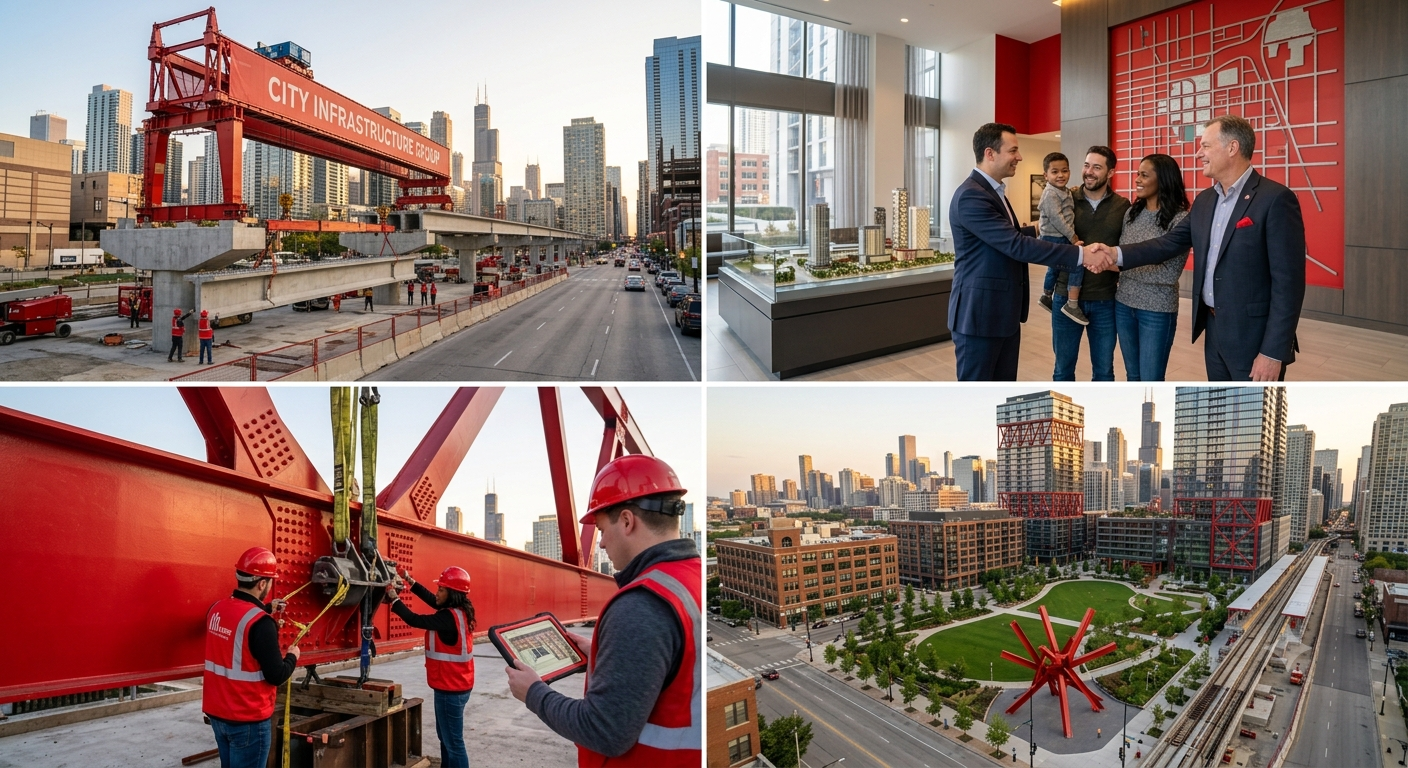
Professionals may work with real estate developers, construction companies, infrastructure companies, banks, private equity firms, investment funds, consulting firms, property management companies, government organizations, municipal authorities, and technology companies.
Government & Public Infrastructure Careers
Government agencies and public-sector organizations play a major role in infrastructure development. Professionals contribute to projects involving highways, railways, airports, urban transportation, housing, water systems, energy, and other public assets.
Government-oriented career opportunities may include:
- Public Works Department roles
- Urban Development Authorities
- Municipal Planning and Development Authorities
- Infrastructure Project Management
- Government Construction and Engineering Services
- Urban and Regional Planning
- Public Sector Infrastructure Companies
- Infrastructure Finance and Policy Roles
- Project Monitoring and Development Agencies
- Public-Private Partnership Project Roles
Professionals working on public infrastructure often collaborate with government departments, contractors, consultants, financial institutions, local authorities, and private developers. These projects require strong coordination because they involve large budgets, multiple stakeholders, regulatory approvals, and long development timelines.
Real Estate Finance & Investment
Real estate is also a major financial and investment sector. Large developments require significant capital, and professionals must evaluate whether a project is financially viable before investment decisions are made.
Real estate finance professionals may analyze property prices, rental income, construction costs, financing structures, expected returns, market demand, and investment risks.
Careers in this area can be especially suitable for students with backgrounds in economics, commerce, finance, mathematics, or business management.
Salary Range in India
Salaries vary depending on qualifications, specialization, location, employer, project size, experience, and performance. Technical and management roles generally follow structured salary ranges, while sales, brokerage, development, and entrepreneurial roles can have significant performance-based compensation.
Typical salary ranges may include:
- Project Engineer / Junior Analyst — ₹4–7 LPA
- Construction / Project Coordinator — ₹5–9 LPA
- Property / Facility Manager — ₹6–12 LPA
- Real Estate Analyst — ₹6–12 LPA
- Real Estate Consultant — ₹7–15 LPA
- Project Manager — ₹10–20 LPA
- Real Estate Investment Manager — ₹12–25 LPA
- Infrastructure Consultant — ₹10–25 LPA
- Senior Development Manager — ₹15–30+ LPA
- Senior Real Estate / Infrastructure Professional — ₹20–40+ LPA
Compensation can be considerably higher for experienced professionals working on large developments, infrastructure projects, investment funds, consulting assignments, or senior management positions. Real estate sales and brokerage roles can also involve commissions and performance-based earnings.
Skills Required
Real Estate & Infrastructure is a multidisciplinary field. Professionals need to understand not only their technical or business specialization but also how different parts of a project interact.
Important skills include:
- Project management
- Financial analysis and budgeting
- Negotiation and communication
- Business development and sales
- Market research
- Investment analysis
- Problem-solving and decision-making
- Knowledge of construction processes
- Understanding of property and land regulations
- Contract and vendor management
- Leadership and teamwork
- Risk management
- Time management
- Stakeholder management
- Analytical and strategic thinking
Professionals may also use tools such as AutoCAD, Revit, BIM software, GIS platforms, Excel, Power BI, project management software, financial modelling tools, and property management systems. The specific technology stack depends on the role.
Real Estate Technology (PropTech)
Technology is changing how properties are developed, marketed, bought, sold, rented, and managed. PropTech, or Property Technology, refers to the use of digital technologies to improve real estate processes and customer experiences.
Modern PropTech applications include online property marketplaces, digital property management systems, virtual property tours, automated valuation tools, smart buildings, digital payments, data analytics, and technology-enabled facility management.
Professionals who combine real estate knowledge with technology, analytics, finance, or product management can find opportunities in the rapidly evolving PropTech ecosystem.
Sustainable Real Estate & Green Infrastructure
Sustainability is becoming increasingly important in the development of buildings and infrastructure. Developers and infrastructure organizations are paying greater attention to energy efficiency, water management, waste reduction, renewable energy, environmentally responsible materials, and climate resilience.
This has created opportunities in green building design, sustainable construction, environmental planning, energy management, green finance, and climate-resilient infrastructure.
Students interested in sustainability can combine real estate or infrastructure education with environmental studies, architecture, engineering, urban planning, or sustainable development.
Future Scope
India's continuing urbanization and infrastructure development are creating long-term opportunities across housing, commercial real estate, transportation, logistics, industrial development, urban infrastructure, and digital property services.
Large-scale development of highways, metro systems, airports, logistics networks, industrial corridors, housing projects, and urban infrastructure is increasing the need for professionals who can manage complex projects efficiently.
At the same time, the industry is becoming more technology-driven. Data analytics, artificial intelligence, Building Information Modelling, smart buildings, digital property platforms, geospatial technology, and automated project monitoring are changing how projects are planned and managed.
Future opportunities are also expected to grow in sustainable construction, affordable housing, smart cities, infrastructure finance, logistics real estate, data centres, renewable energy infrastructure, and climate-resilient urban development.
Entrepreneurship in Real Estate
Real estate is also a field where entrepreneurial opportunities can be significant. Professionals can eventually establish development companies, property consulting firms, brokerage businesses, construction companies, property management services, investment advisory firms, or PropTech startups.
Entrepreneurship in this sector requires strong knowledge of market demand, financing, regulations, project execution, sales, customer relationships, and risk management. Building a successful business generally requires substantial industry experience and a strong professional network.
Is Real Estate & Infrastructure the Right Career for You?
Real Estate & Infrastructure can be an excellent career choice for students who enjoy business, construction, architecture, finance, management, urban development, and solving large-scale practical problems.
You may enjoy this career if you:
- Like seeing tangible results from your work
- Are interested in buildings, cities and infrastructure
- Enjoy business and financial decision-making
- Have strong communication and negotiation skills
- Like managing projects and teams
- Enjoy working with different professionals
- Are comfortable taking responsibility for large projects
- Have an interest in investment and property markets
- Want to contribute to urban development
- Enjoy combining technical knowledge with management
However, the industry may not be ideal if you prefer a completely predictable work environment or dislike dealing with multiple stakeholders, deadlines, negotiations, site visits, financial responsibility, and project-related uncertainty.
Final Thoughts
Real Estate & Infrastructure is about much more than constructing buildings. It is about creating the physical foundation on which communities, businesses, industries, and cities operate.
From residential developments and commercial properties to highways, airports, transportation systems, industrial parks, and smart cities, professionals in this field contribute to projects that can shape communities for decades.
For students who want to combine business, engineering, finance, architecture, planning, technology, and management, Real Estate & Infrastructure offers a wide range of career opportunities. With the growth of urbanization, infrastructure investment, PropTech, sustainable development, and data-driven decision-making, the sector is evolving rapidly and creating opportunities for professionals with diverse skill sets.
If you enjoy turning ideas and plans into real-world projects and want a career where your work can visibly influence cities and communities, Real Estate & Infrastructure can be a rewarding and dynamic career path.