Journalism plays a vital role in keeping society informed. Journalists investigate events, verify information, question people in positions of authority, explain complex issues, and bring important stories to the public. The profession has traditionally been associated with newspapers, television, and radio, but the modern media landscape has expanded dramatically.
Today, journalism exists across digital news platforms, social media, podcasts, newsletters, video channels, documentaries, streaming platforms, and independent publications. This transformation has created new opportunities for people who can combine traditional reporting skills with digital storytelling and technology.
At the heart of journalism is the responsibility to seek accurate information and communicate it clearly. In an environment where misinformation spreads rapidly, the ability to verify facts, understand context, ask difficult questions, and maintain professional ethics has become more important than ever.
What are Media and Journalism?
Journalism is the process of gathering, verifying, analyzing, and presenting information about events and issues that are relevant to the public. It involves reporting facts, interviewing sources, researching documents, attending events, investigating claims, and presenting stories through appropriate media formats.
Media is a broader concept that includes the channels through which information and entertainment are communicated. These include newspapers, magazines, television, radio, websites, social media platforms, podcasts, streaming services, and other digital formats.
Modern journalists are increasingly expected to work across multiple formats. A reporter may write an article, record an interview, photograph an event, produce a short video, and publish updates for digital audiences.
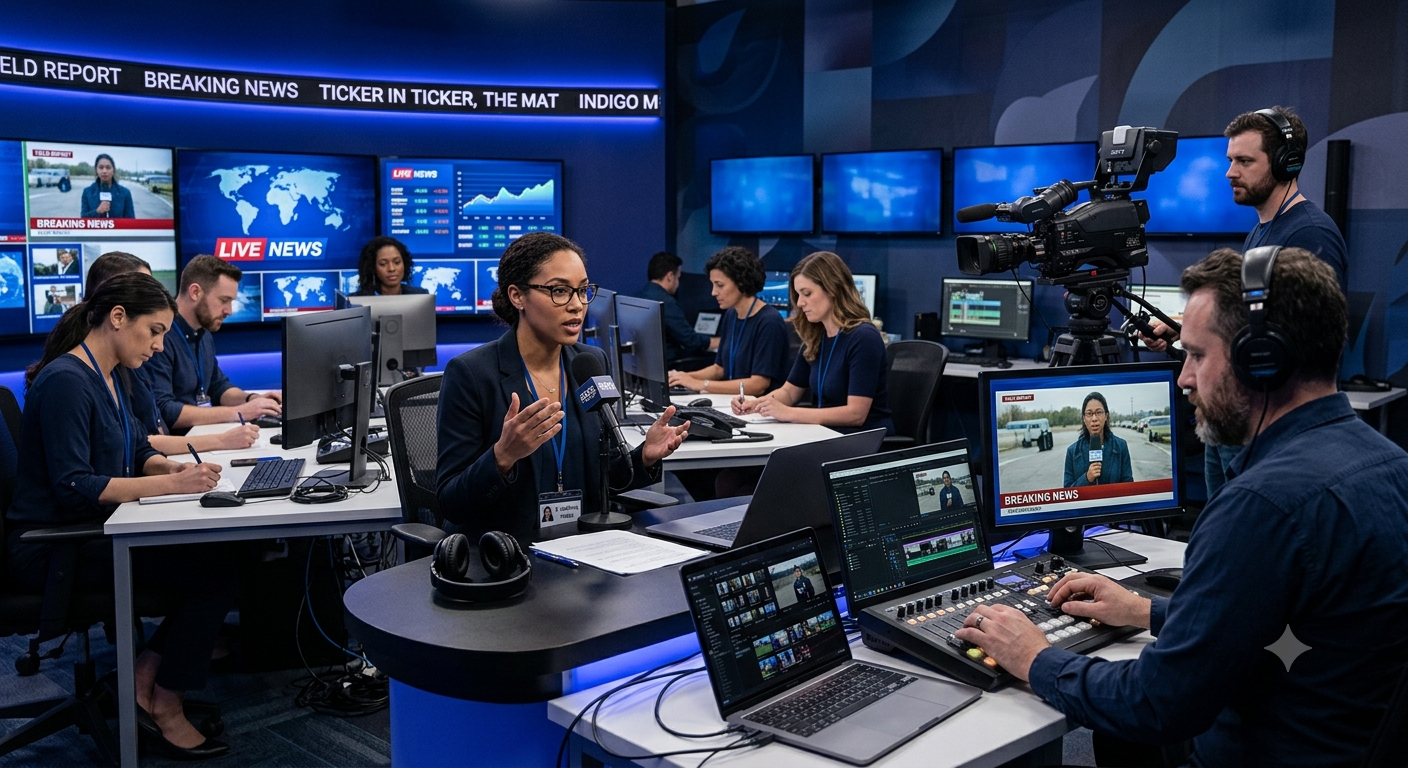
Major Areas of Media & Journalism
Media and journalism is a broad field with several specializations. Students can choose an area according to their interests, strengths, and preferred working environment.
Major areas include:
- Print Journalism
- Broadcast Journalism
- Digital Journalism
- Investigative Journalism
- Political Journalism
- Business Journalism
- Sports Journalism
- Entertainment Journalism
- Photojournalism
- Data Journalism
- Science Journalism
- Environmental Journalism
- Documentary Production
- Podcast Journalism
- Feature Writing
- Opinion and Editorial Writing
Print Journalism
Print journalism includes newspapers, magazines, journals, and other publications. Although digital media has changed the industry significantly, print journalism continues to play an important role in detailed reporting, investigative stories, analysis, features, and specialized publications.
Print journalists need strong writing and editing skills because articles must communicate information clearly while maintaining accuracy, context, and reader engagement.
- Reporter
- Feature Writer
- Copy Editor
- Sub-editor
- Editorial Writer
- Columnist
- Magazine Writer
Broadcast Journalism
Broadcast journalism involves presenting news and information through television, radio, and other audiovisual formats. Broadcast journalists may work as reporters, anchors, producers, researchers, correspondents, or field journalists.
Unlike traditional print reporting, broadcast journalism requires professionals to think visually and communicate information effectively through spoken language, video, graphics, interviews, and live reporting.
Digital Journalism
Digital journalism has transformed how audiences consume news. News websites, mobile applications, social media, newsletters, podcasts, and video platforms allow stories to reach audiences almost instantly.
Digital journalists need to understand not only reporting and writing but also online publishing, audience behavior, search visibility, social media distribution, multimedia production, and analytics.
The speed of digital publishing makes verification especially important. Journalists must balance the pressure to publish quickly with the responsibility to publish accurately.
- Digital Reporter
- Web Editor
- Online News Producer
- Social Media Journalist
- Newsletter Editor
- Multimedia Journalist
- Digital Content Producer
Investigative Journalism
Investigative journalism involves researching complex issues that may require weeks or months of reporting. Investigative journalists often examine documents, financial records, public data, interviews, court records, and other sources to uncover information that may not be immediately visible.
This specialization requires patience, research ability, source development, fact-checking, analytical thinking, and strong ethical judgment.
Investigative journalism can contribute significantly to public accountability by bringing attention to issues such as corruption, financial misconduct, institutional failures, environmental problems, or social injustice.
Data Journalism
Data journalism combines reporting with statistics, datasets, visualization, and analytical tools. Instead of relying only on interviews and observations, journalists can use large datasets to identify patterns and explain complicated issues.
A data journalist may investigate election statistics, economic indicators, public health information, education outcomes, environmental data, or government spending.
Students who enjoy journalism as well as mathematics, statistics, spreadsheets, programming, or data visualization may find this specialization particularly attractive.
- Data Research
- Data Analysis
- Interactive Visualizations
- Statistical Reporting
- Public Data Investigation
- Infographic Development
Career Opportunities
The media industry offers careers both in front of the camera and behind the scenes. A successful media organization requires reporters, editors, researchers, producers, photographers, videographers, designers, technical professionals, and digital specialists.
Popular career options include:
- News Reporter / Correspondent
- Broadcast Journalist
- News Anchor
- Investigative Journalist
- Political Journalist
- Business Journalist
- Sports Journalist
- Feature Writer
- Columnist
- Editor / Copy Editor
- Photojournalist
- Videographer
- Digital Content Producer
- Social Media Editor
- Podcast Producer
- Documentary Filmmaker
- News Researcher
- Data Journalist
- News Producer
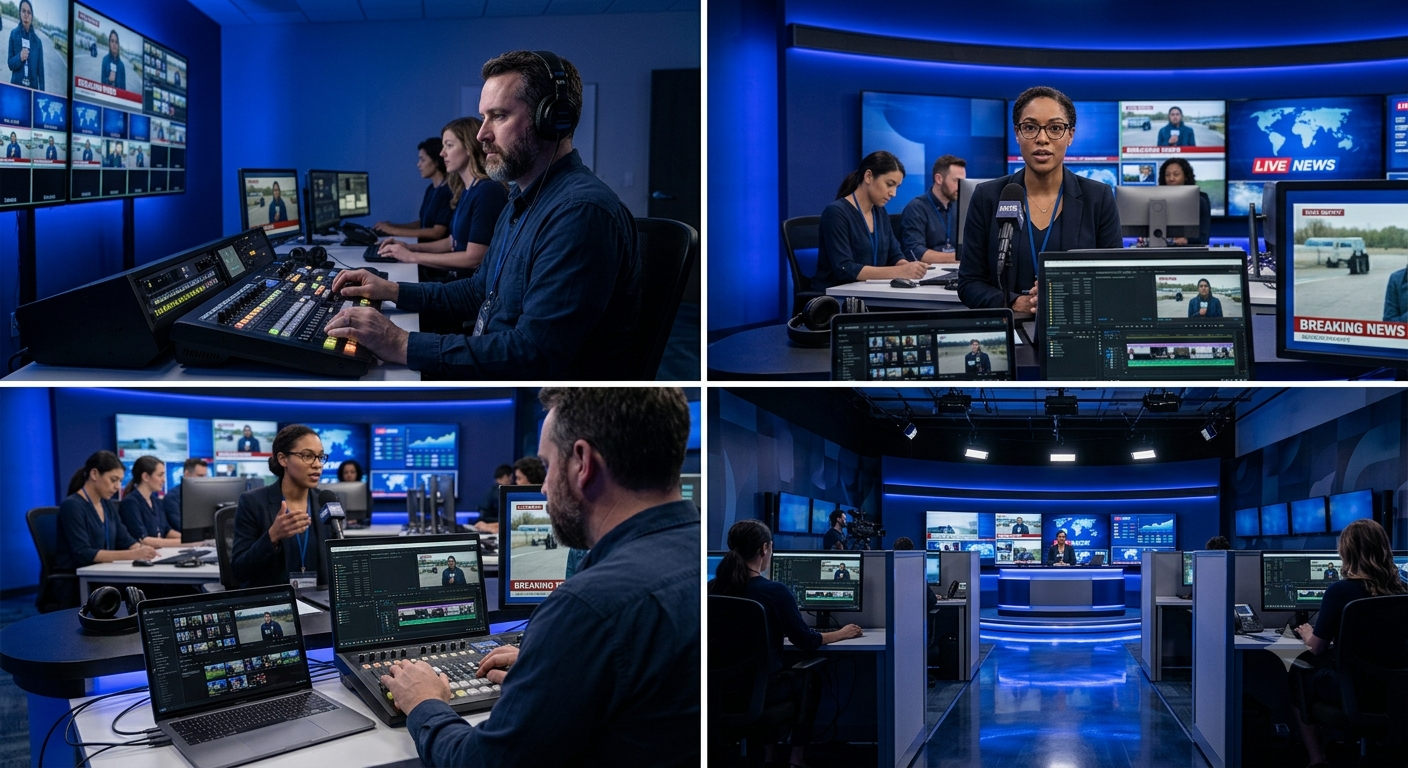
Career Pathway
Students can enter journalism and media from a variety of academic backgrounds. Humanities can provide a useful foundation because subjects such as political science, economics, sociology, history, and literature help students understand society and current affairs.
However, journalism is open to students from different academic streams who develop strong communication, research, and storytelling skills.
A common pathway includes:
Importance of Internships
Media is a practical profession, and classroom learning is only one part of becoming a successful journalist. Internships provide students with exposure to real deadlines, editorial processes, interviews, newsroom culture, production equipment, and professional communication.
Students can build experience through internships with:
- Newspapers
- Television News Channels
- Digital News Platforms
- Magazines
- Radio Stations
- Production Houses
- Podcast Companies
- Documentary Teams
- Independent Media Organizations
- Content Agencies
Research and Fact-Checking
Good journalism begins with reliable information. Journalists must distinguish between verified facts, opinions, claims, rumors, and incomplete information.
Fact-checking may involve comparing multiple sources, examining original documents, contacting relevant experts, checking official records, reviewing historical context, and confirming quotes.
Strong research skills are particularly important in investigative, political, business, science, and data journalism, where inaccurate reporting can have significant consequences.
Ethics in Journalism
Journalism carries significant responsibility because published information can influence public opinion, affect reputations, and shape conversations around important social issues.
Professional journalists are expected to value accuracy, fairness, accountability, transparency, source protection where appropriate, and responsible reporting.
Ethical journalism also requires journalists to recognize conflicts of interest, avoid deliberately misleading audiences, distinguish reporting from opinion, and correct significant errors when they occur.
- Accuracy
- Fairness
- Independence
- Accountability
- Source Verification
- Responsible Reporting
- Transparency
- Respect for Privacy
Interviewing & Reporting Skills
Interviews are one of the most important tools in journalism. A good journalist needs to ask clear questions, listen carefully, understand the answers, identify contradictions, and follow up when necessary.
Reporting also requires observation. Journalists working in the field need to notice details, understand the environment, record information accurately, and separate what they directly observe from what sources tell them.
These skills improve with practice. Students can begin by interviewing teachers, professionals, community members, or local organizations while learning how to prepare questions and verify information.
Multimedia Storytelling
Modern audiences consume information through multiple formats. A single story may appear as a written article, short video, photo gallery, infographic, podcast episode, social media post, or interactive webpage.
Multimedia journalism therefore rewards professionals who can combine writing with photography, video production, audio editing, graphics, and digital publishing.
Students who develop multiple production skills can become more versatile and valuable in modern media organizations.
- Writing
- Photography
- Videography
- Audio Recording
- Video Editing
- Graphic Design
- Podcast Production
- Social Media Publishing
- Data Visualization
Top Institutes in India
India has several respected institutions offering journalism, mass communication, media studies, and related programs.
Some prominent institutions include:
- Indian Institute of Mass Communication (IIMC), New Delhi
- Asian College of Journalism (ACJ), Chennai
- AJK Mass Communication Research Centre, Jamia Millia Islamia
- Symbiosis Institute of Media & Communication (SIMC), Pune
- Xavier Institute of Communications (XIC), Mumbai
- Lady Shri Ram College for Women, University of Delhi
- Christ University, Bengaluru
- Manipal Institute of Communication
Students should compare programs based on curriculum, practical training, internships, faculty, industry exposure, specialization options, campus media opportunities, and alumni networks rather than choosing an institution only by name.
Media Production
Journalism is only one part of the broader media industry. Media production involves planning, recording, editing, and distributing visual and audio content.
Production professionals may work on news programs, documentaries, interviews, podcasts, digital videos, television programs, branded content, and streaming productions.
Possible roles include:
- Producer
- Assistant Producer
- Production Coordinator
- Video Editor
- Camera Operator
- Sound Designer
- Production Researcher
- Documentary Producer
- Post-production Specialist
Podcasting & Audio Journalism
Podcasts have created another important format for journalism and storytelling. Audio journalism allows professionals to explore topics through interviews, investigations, narrative storytelling, discussions, and documentary-style productions.
Podcast professionals need skills in research, interviewing, scripting, audio recording, editing, storytelling, and audience development.
Students can begin building experience by creating their own small podcast projects and learning basic audio production.
Documentary Filmmaking
Documentary filmmaking combines journalism, research, filmmaking, and storytelling to explore real people, events, communities, and social issues.
Documentary professionals may spend significant time researching subjects, developing story structures, conducting interviews, recording footage, and editing the final production.
This field is ideal for students who enjoy deep research but also have a strong interest in visual storytelling.
Technology in Modern Journalism
Technology has changed almost every stage of the journalism process. Journalists now use smartphones, digital cameras, editing software, data tools, content management systems, social platforms, analytics platforms, and artificial intelligence-assisted tools.
Technology can make research and production more efficient, but journalists still need human judgment to verify information, understand context, make ethical decisions, and determine whether a story is genuinely newsworthy.
Important technology skills include:
- Content Management Systems
- Video Editing
- Audio Editing
- Digital Photography
- Social Media Tools
- Data Analysis
- Data Visualization
- Search and Research Tools
- Basic Web Publishing
- Digital Analytics
Social Media & Journalism
Social media has changed both how journalists find information and how audiences receive news. Platforms can provide immediate access to eyewitness accounts, public reactions, expert commentary, and emerging stories.
However, social media information is not automatically reliable. Journalists must verify photographs, videos, quotes, accounts, dates, locations, and claims before treating them as confirmed information.
Professionals who understand both journalism ethics and digital audience behavior can play an important role in responsible online news distribution.
Salary Range in India
Journalism and media salaries vary significantly depending on the organization, specialization, experience, location, audience reach, and professional reputation. Starting salaries can be modest, while experienced editors, senior correspondents, prominent anchors, producers, and specialized media professionals may earn substantially more.
Indicative career ranges include:
- Junior Reporter / Sub-editor — ₹2.5–5 LPA
- Digital Content Producer — ₹3–7 LPA
- Video Journalist / Multimedia Journalist — ₹3–8 LPA
- Senior Correspondent — ₹6–12 LPA
- Investigative / Specialized Journalist — ₹6–15 LPA
- Editor / News Producer — ₹10–20+ LPA
- Senior News Anchor / Media Professional — ₹15–30+ LPA
Freelancers, independent creators, documentary filmmakers, newsletter publishers, and media entrepreneurs may have very different income structures. Their earnings can depend on contracts, audience size, sponsorships, subscriptions, commissions, projects, and other sources of revenue.
Skills Required
A successful journalist needs much more than good writing. The profession requires curiosity, research ability, communication skills, professional ethics, adaptability, and the confidence to ask difficult questions.
Important skills include:
- Excellent writing and storytelling
- Strong research skills
- Curiosity and a 'nose for news'
- Interviewing and questioning
- Fact-checking
- Critical thinking
- Current affairs awareness
- Communication skills
- Digital literacy
- Video and audio production
- Time management
- Ability to work under deadlines
- Professional ethics
- Adaptability
- Networking and relationship building
Challenges in Journalism
Journalism can be exciting, but it can also be demanding. News organizations often operate under strict deadlines, and journalists may need to work early mornings, late nights, weekends, or holidays depending on breaking events.
Field reporters may travel frequently and work in unpredictable environments. Investigative journalism can require extensive research, repeated interviews, and careful documentation.
The digital environment has added another challenge: journalists must work quickly while still maintaining accuracy and resisting pressure to publish unverified information.
Future Scope
The media industry is undergoing a major transformation. While some traditional print operations have contracted, digital journalism, podcasts, newsletters, video journalism, data journalism, independent media, and multimedia storytelling continue to create new opportunities.
The future is increasingly focused on professionals who can work across multiple formats. A journalist who can research, write, record video, edit audio, analyze data, and communicate through digital platforms has a wider range of career opportunities.
Specialized journalism is also becoming increasingly valuable. Areas such as technology, finance, climate, science, healthcare, sports, business, and international affairs require journalists who understand both reporting and the subject they cover.
Emerging Career Areas
As technology and audience behavior continue to change, new roles are emerging across the media ecosystem.
Growing areas include:
- Data Journalism
- Digital Investigations
- Podcast Journalism
- Independent Newsletters
- Video Journalism
- Social Media Journalism
- AI and Technology Reporting
- Climate Journalism
- Business and Financial Journalism
- Science Communication
- Fact-Checking
- Audience Analytics
- Multimedia Storytelling
- Creator-led Journalism
Media Entrepreneurship
The internet has made it possible for journalists and media professionals to build independent audiences without relying entirely on traditional media organizations.
Experienced professionals can create independent publications, newsletters, podcasts, documentary channels, specialist media websites, research platforms, or video journalism brands.
Entrepreneurial opportunities include:
- Independent News Website
- Digital Publication
- Podcast Network
- Newsletter Brand
- Documentary Production Company
- Media Research Organization
- Video Journalism Channel
- Specialized Industry Publication
- Content Production Studio
Building a Journalism Portfolio
A strong portfolio can be extremely valuable when applying for internships and entry-level media roles. Students do not need to wait until graduation to begin building one.
A beginner portfolio can include original articles, interviews, photographs, short videos, investigative projects, podcast episodes, opinion pieces, data stories, and multimedia projects.
The goal should be to demonstrate curiosity, research ability, clear writing, storytelling, accuracy, and the ability to communicate information effectively.
- Published Articles
- Interview Projects
- News Reports
- Feature Stories
- Photo Essays
- Short Documentaries
- Podcast Episodes
- Data Stories
- Video Reports
- Investigative Projects
Is this the Right Career for You?
Media and Journalism can be an excellent career choice if you are naturally curious, enjoy asking questions, like understanding current affairs, and want to communicate stories that matter.
You may enjoy journalism if you:
- Love asking questions
- Enjoy researching unfamiliar topics
- Follow current affairs regularly
- Like writing and storytelling
- Enjoy meeting and interviewing different people
- Can work under deadlines
- Are comfortable with uncertainty
- Have strong communication skills
- Care about accuracy and facts
- Enjoy learning new technologies
- Want a career with variety and movement
Journalism may be less suitable if you strongly prefer predictable routines, dislike deadlines, are uncomfortable speaking with unfamiliar people, or are unwilling to verify information carefully. The profession demands persistence because stories do not always develop quickly and early-career opportunities can be competitive.
Final Thoughts
Media and Journalism is no longer limited to newspapers, television studios, and traditional newsrooms. It has evolved into a broad ecosystem combining reporting, research, writing, photography, video, audio, data, technology, and digital communication.
The strongest modern journalists are versatile storytellers who can understand complex subjects, identify important questions, verify information, communicate clearly, and adapt their work to different platforms.
For students who are naturally inquisitive and want to understand the world around them, journalism can provide an intellectually stimulating career with opportunities to meet diverse people, investigate important issues, and contribute to public understanding.
If you are willing to develop strong research skills, maintain professional ethics, learn digital tools, and build experience through internships and a strong portfolio, Media and Journalism can become a dynamic and meaningful long-term career.