Gaming, Animation and Design bring together creativity, technology, storytelling, and visual communication to create experiences that entertain, educate, and engage audiences. From blockbuster films and animated series to video games, advertising, virtual reality, and digital experiences, creative technology has become an important part of the modern media industry.
This field is ideal for students who enjoy drawing, storytelling, technology, visual design, gaming, character creation, or building imaginary worlds. Professionals in this industry combine artistic skills with specialised software and technical knowledge to turn ideas into characters, environments, games, films, and interactive experiences.
As digital entertainment continues to expand across India and global markets, opportunities are growing for skilled artists, designers, developers, animators, storytellers, and creative technologists.
What are Gaming, Animation & Design?
Gaming involves creating interactive digital experiences where players can explore worlds, solve problems, compete, collaborate, and experience stories. Game development brings together programming, game mechanics, storytelling, art, animation, sound, user experience, and level design.
Animation is the process of creating the illusion of movement through sequences of drawings, 2D artwork, 3D models, or digitally generated imagery. It is widely used in films, television, advertising, games, education, product visualisation, and digital media.
Design provides the visual and experiential foundation of these industries. It includes character design, environment design, user interface design, concept art, motion graphics, visual communication, and interactive experience design.
Career Opportunities
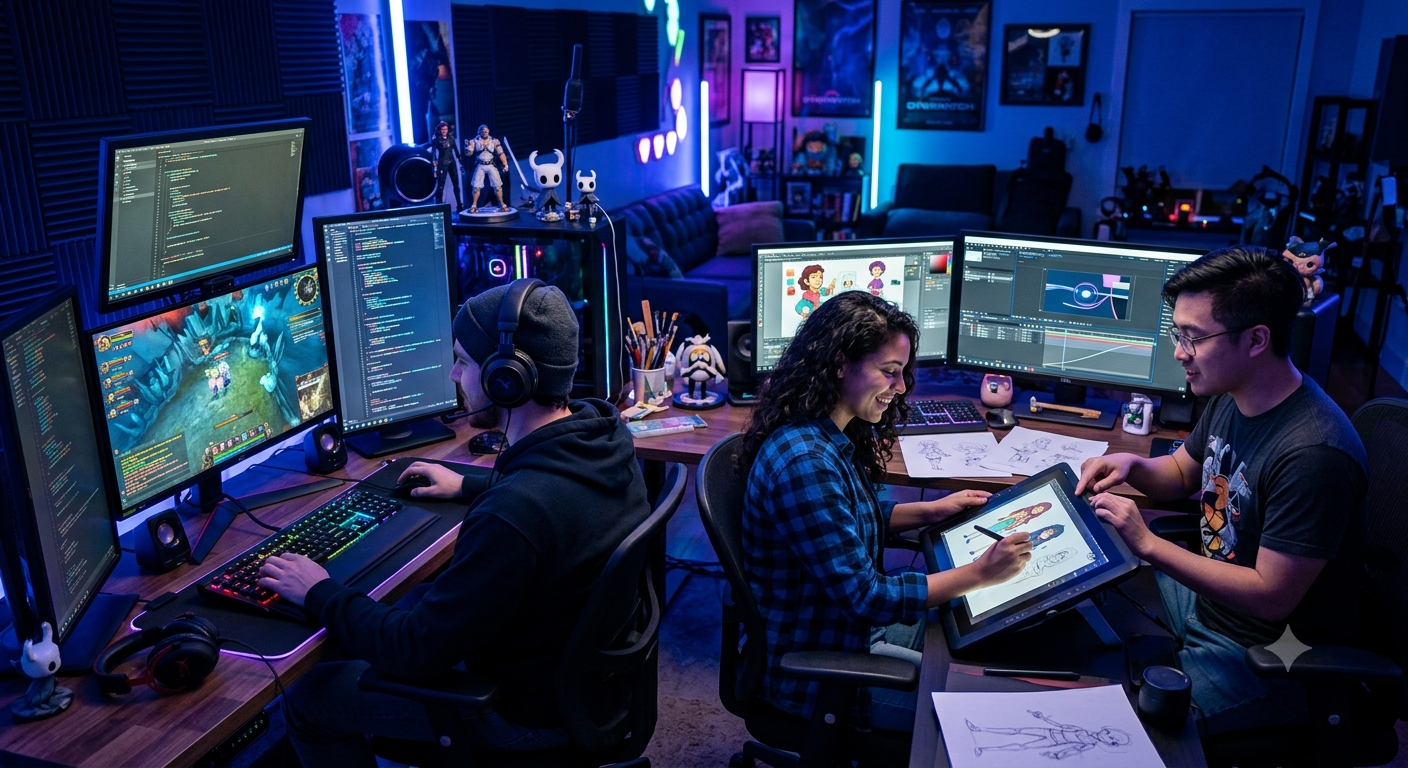
The industry offers a wide range of specialised career paths. Students can choose a role based on their strengths in art, storytelling, technology, design, animation, or programming.
- Game Designer
- Game Developer / Programmer
- Game Artist
- 3D Modeler
- 3D Animator
- 2D Animator
- Character Designer
- Concept Artist
- Environment Artist
- VFX Artist
- Motion Graphics Designer
- Storyboard Artist
- UI/UX Designer
- Technical Artist
- Creative Director
- Sound / Audio Designer
Creative professionals often work as part of multidisciplinary teams. A game, animated film, or visual effects project may involve artists, animators, programmers, designers, writers, sound professionals, producers, and technical specialists working together toward a common creative vision.
Career Pathway
There is no single route into gaming, animation, or design. Students can choose a degree, diploma, specialised training program, or build skills independently through structured learning and practical projects.
A strong portfolio is one of the most important assets in this industry. Employers often want to see what a candidate can actually create, rather than relying only on academic qualifications. Students should therefore start building personal projects and documenting their creative work early.
Specialisations to Explore
Students can specialise in different areas depending on their interests and strengths:
- 2D Animation and Illustration
- 3D Animation
- Character Design
- 3D Modelling
- Game Art
- Game Programming
- Game Design and Level Design
- Visual Effects (VFX)
- Motion Graphics
- Concept Art
- UI/UX and Interactive Design
- Virtual Reality and Augmented Reality
- Technical Art
- Digital Storytelling
Top Institutes in India
Students interested in design, animation, gaming, and visual communication can explore a combination of specialised institutes, design schools, universities, and professional training academies.
- National Institute of Design (NID)
- Srishti Manipal Institute of Art, Design and Technology
- Whistling Woods International
- MIT Institute of Design
- National Institute of Fashion Technology (NIFT) — for selected design pathways
- Maya Academy of Advanced Cinematics (MAAC)
- Arena Animation
- Frameboxx Animation and Visual Effects
Students should compare institutes based on faculty, curriculum, software training, studio facilities, industry exposure, internships, placement opportunities, and most importantly, the quality of student portfolios produced by the program.
Entrance Exams
Admission requirements depend on the institute and program. Some commonly relevant entrance routes include:
- NID DAT — for eligible design programs at NID
- UCEED — for undergraduate design programs at participating institutes
- NIFT Entrance Examination — for selected design programs
- University-specific design entrance tests
- Portfolio Reviews and Interviews
- Institute-specific aptitude and creative ability tests
Many creative programs assess drawing ability, visualisation, creativity, design thinking, observation, problem-solving, and portfolio quality in addition to academic performance.
Salary Range in India
Salaries vary significantly depending on the role, portfolio quality, technical skills, experience, studio, project type, and industry. Typical salary ranges include:
- Junior Animator / Artist — ₹3–5 LPA
- Game Designer / Junior Game Developer — ₹4–8 LPA
- 3D Artist / VFX Artist — ₹4–8 LPA
- Mid-Level Animator / Game Artist — ₹6–12 LPA
- Senior Artist / Senior Game Developer — ₹10–20+ LPA
- Art Director / Creative Director — ₹15–30+ LPA
Professionals with strong portfolios and experience in international productions, major game studios, animation houses, VFX companies, or specialised technical roles may have access to significantly higher compensation opportunities.
Skills Required
Success in gaming, animation, and design requires a combination of creativity, technical ability, visual understanding, and collaboration.
- Creativity and Original Thinking
- Drawing and Visualisation
- Storytelling
- Understanding of Colour, Composition and Form
- 3D Modelling and Animation
- Design Thinking
- Attention to Detail
- Problem-Solving
- Communication and Teamwork
- Time Management
- Patience and Persistence
- Ability to Learn New Software and Technologies
Tools and Technologies
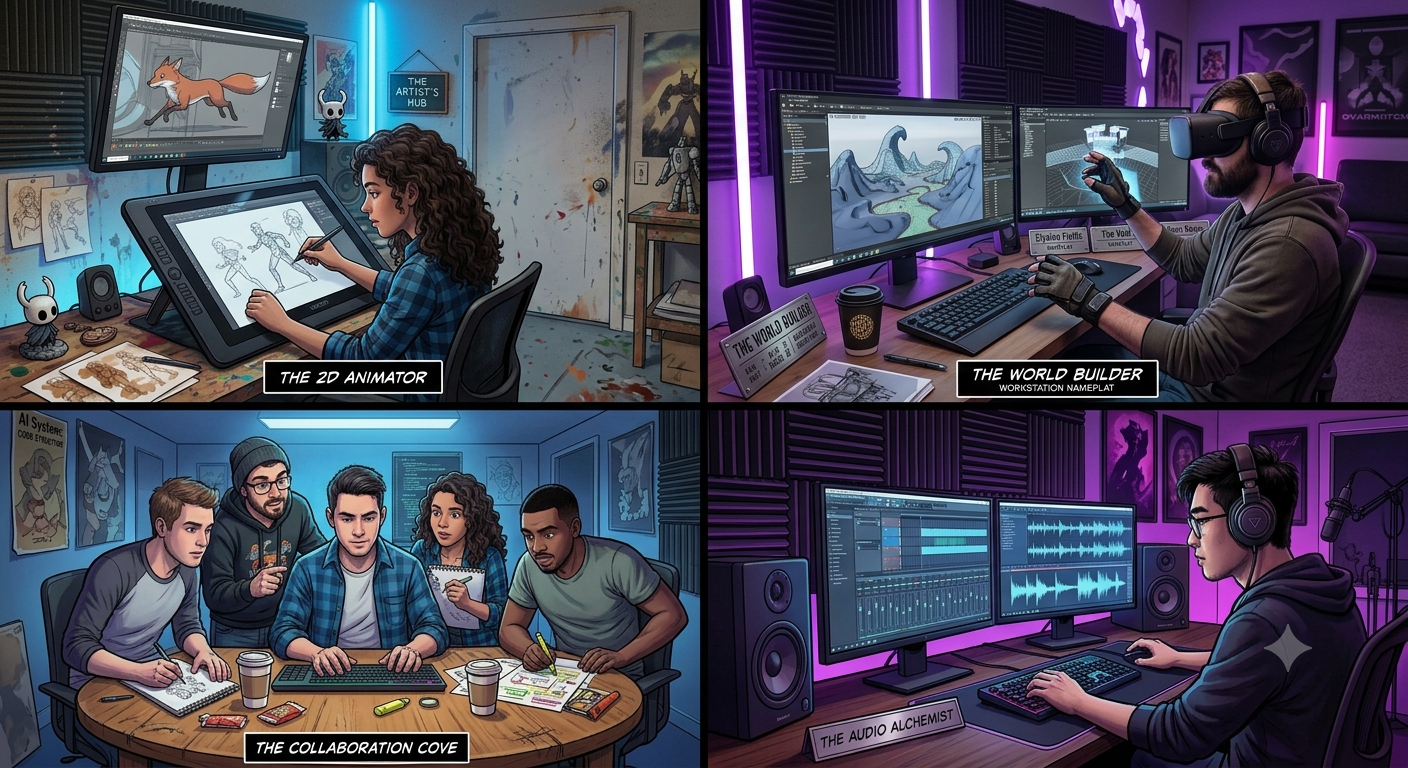
Creative professionals use different software depending on their specialisation. Students do not need to master everything at once. It is better to become highly proficient in a few relevant tools while developing strong fundamentals.
- Blender — 3D modelling, animation and rendering
- Autodesk Maya — 3D animation and modelling
- Adobe Photoshop — Digital artwork and image editing
- Adobe After Effects — Motion graphics and visual effects
- Adobe Premiere Pro — Video editing
- Unity — Game development and interactive experiences
- Unreal Engine — Game development, real-time 3D and virtual production
- Substance 3D — Texturing and material creation
- ZBrush — Digital sculpting and character creation
- Figma — Interface and interactive design
Importance of a Portfolio
A portfolio is often more important than simply listing software skills on a resume. It allows employers and clients to evaluate creativity, technical ability, visual quality, storytelling, problem-solving, and consistency.
Students should gradually build a portfolio containing their strongest work. Depending on the chosen career, this could include character designs, illustrations, 3D models, animation clips, game prototypes, environment designs, UI concepts, VFX shots, or complete short projects.
Future Scope
The future of gaming, animation, and digital design is expanding beyond traditional movies and video games. Real-time 3D technologies, virtual production, augmented reality, virtual reality, interactive storytelling, and digital experiences are creating new opportunities for creative professionals.
The gaming industry is also expanding beyond entertainment. Game-based experiences and interactive technologies are increasingly being explored in education, healthcare, corporate training, advertising, simulation, architecture, and other sectors.
- Mobile and PC Gaming
- Console Gaming
- Virtual Reality (VR)
- Augmented Reality (AR)
- Real-Time 3D and Virtual Production
- Animated Films and Series
- Visual Effects and Post-Production
- Interactive Advertising
- Educational Games and Simulations
- Metaverse and Immersive Experiences
- Digital Character and Environment Design
- AI-Assisted Creative Production
Artificial intelligence is also becoming part of creative workflows, helping professionals with tasks such as concept exploration, procedural generation, animation assistance, image creation, asset development, and production workflows. This makes creative professionals who understand both artistic fundamentals and emerging technology increasingly valuable.
Challenges in the Industry
Creative careers can be highly rewarding, but they also require patience and persistence. Production environments may involve tight deadlines, revisions, long working hours, extensive screen time, and frequent feedback from clients, directors, producers, or creative leads.
The industry also changes rapidly as software, hardware, platforms, and production techniques evolve. Professionals need to continuously improve their portfolios and learn new tools to remain competitive.
Is Gaming, Animation & Design the Right Career for You?
This could be an excellent career choice if you:
- Love drawing, visual art, storytelling, or digital creativity
- Enjoy video games and interactive experiences
- Like creating characters, environments, or imaginary worlds
- Have strong attention to visual detail
- Enjoy experimenting with creative software
- Are patient enough to refine your work repeatedly
- Enjoy working with creative and technical teams
- Are willing to continuously improve your portfolio
- Want to combine creativity with technology
However, students should understand that creative careers require consistent practice, portfolio development, long production cycles, tight deadlines, and continuous learning. Talent can provide a starting point, but professional success usually comes from developing strong skills through regular practice and real-world projects.
Final Thoughts
Gaming, Animation and Design offer an exciting opportunity for students who want to turn imagination into something people can see, play, experience, and remember. From designing game worlds and animated characters to creating cinematic visual effects and immersive digital experiences, the industry combines artistic creativity with advanced technology.
As gaming, streaming, virtual production, AR/VR, and digital entertainment continue to grow, new opportunities are emerging for artists, designers, developers, animators, storytellers, and creative technologists. If you are passionate about creativity and want a career where you can build worlds, tell stories, and create memorable experiences, Gaming, Animation & Design could be the right path for you.