Behind every elite athlete breaking a record is a team of professionals working to improve performance, prevent injuries, optimize nutrition, monitor recovery, and maintain physical and mental readiness. Fitness and Sports Science brings together scientific knowledge of the human body with practical training and performance management.
The field is no longer limited to professional athletes or gym trainers. Growing awareness about preventive healthcare, lifestyle diseases, physical fitness, sports participation, and wellness has created opportunities across hospitals, fitness centers, schools, sports academies, professional teams, rehabilitation clinics, research institutions, and corporate wellness programs.
As professional sports continue to expand in India and wearable technology makes it easier to measure performance, professionals who understand exercise science, biomechanics, nutrition, rehabilitation, and data are becoming increasingly valuable.
What is Fitness and Sports Science?
Sports Science is the scientific study of how the human body and mind respond to exercise, training, competition, and physical activity. It combines disciplines such as exercise physiology, biomechanics, sports psychology, nutrition, anatomy, physiology, and performance analysis.
Fitness science applies similar principles to the general population. It focuses on improving physical fitness, strength, endurance, mobility, body composition, health, and overall quality of life through scientifically informed exercise and lifestyle practices.
The ultimate objective is not simply to make someone stronger or faster. Professionals in this field aim to help people move safely, perform efficiently, recover effectively, and maintain long-term health.
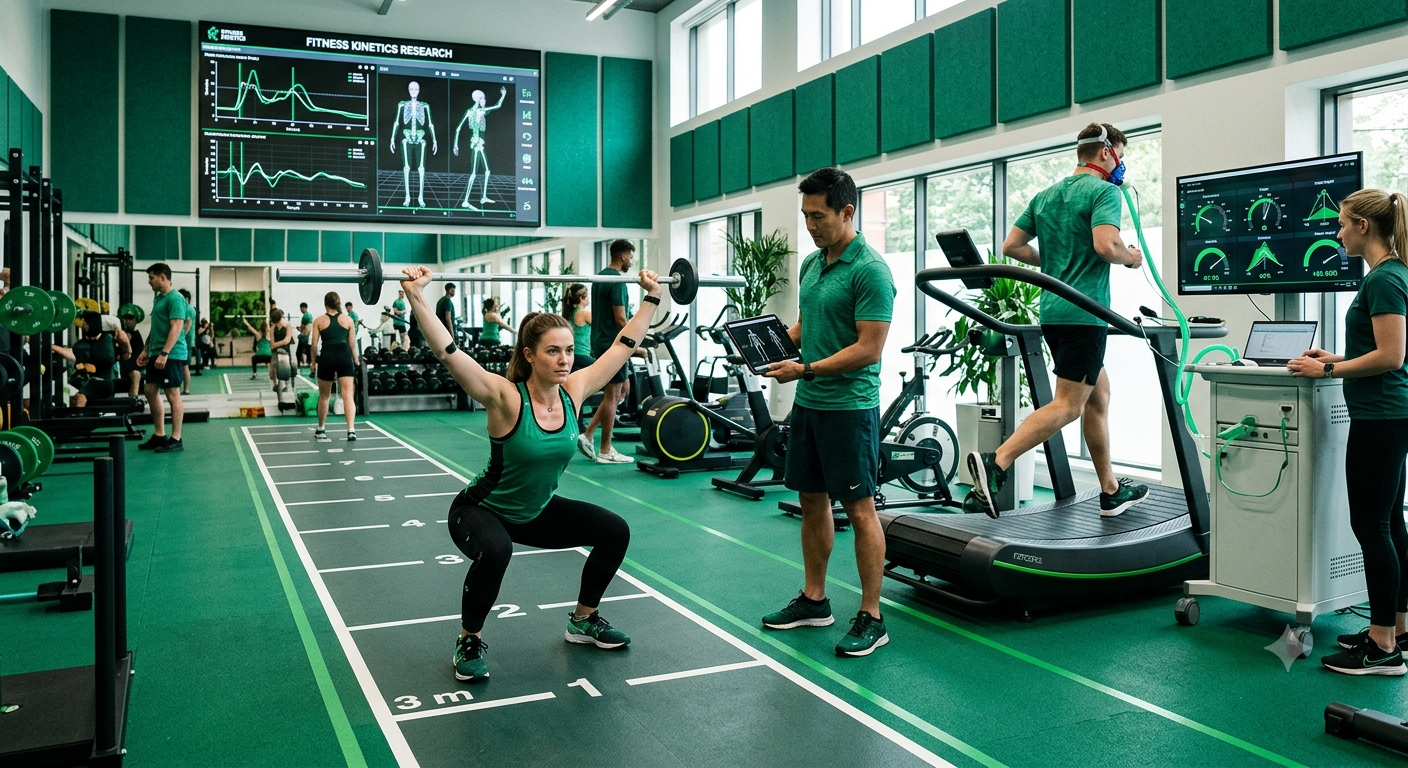
Major Areas of Fitness & Sports Science
Fitness and Sports Science is a multidisciplinary field. Students can specialize according to whether they are more interested in performance, rehabilitation, nutrition, research, coaching, or fitness management.
Major areas include:
- Exercise Physiology
- Sports Biomechanics
- Strength and Conditioning
- Sports Nutrition
- Sports Psychology
- Sports Physiotherapy
- Athletic Training
- Exercise Rehabilitation
- Sports Performance Analysis
- Fitness Management
- Sports Data Analytics
- Health and Wellness
- Physical Education
- Sports Research
These areas often overlap. For example, an elite athlete may work with a physiotherapist for injury rehabilitation, a strength and conditioning coach for physical preparation, a nutrition professional for dietary planning, a sports psychologist for mental preparation, and a performance analyst for data-driven feedback.
Career Opportunities
The growth of professional sports, fitness centers, wellness programs, rehabilitation services, and sports technology has created a broad range of career opportunities.
Popular career options include:
- Sports Physiotherapist
- Strength and Conditioning Coach
- Sports Nutritionist
- Sports Dietitian
- Exercise Physiologist
- Sports Psychologist
- Biomechanist
- Athletic Trainer
- Fitness Trainer
- Personal Trainer
- Sports Performance Analyst
- Sports Data Analyst
- Fitness Center Manager
- Sports Rehabilitation Specialist
- Exercise Rehabilitation Professional
- Sports Researcher
- Physical Education Professional
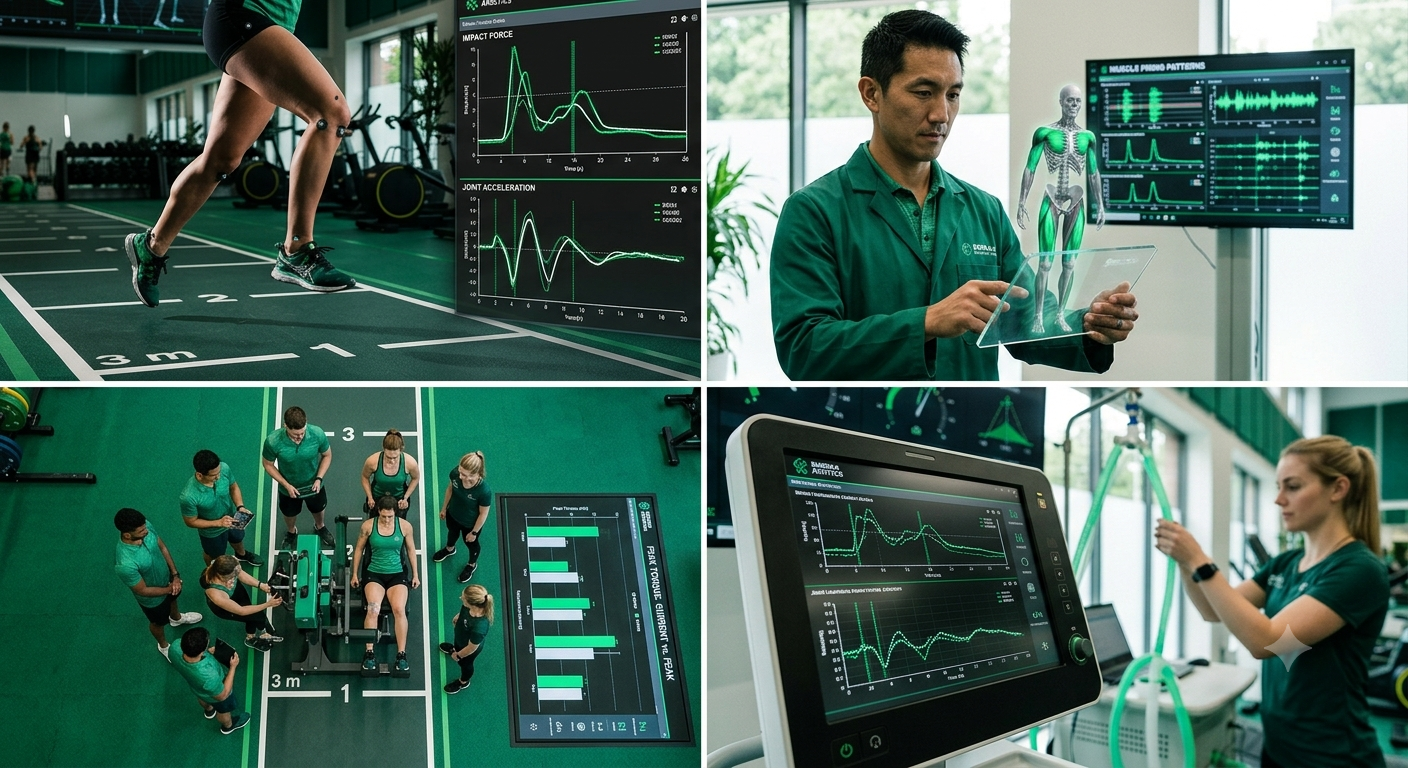
Exercise Physiology
Exercise physiology focuses on understanding how the body responds to physical activity. Professionals study cardiovascular function, muscular performance, energy systems, endurance, fatigue, recovery, and adaptation to training.
Exercise physiologists can work with athletes as well as individuals managing fitness and health goals. Their knowledge is particularly useful when exercise programs need to be designed according to an individual's physical condition and performance requirements.
- Exercise Testing
- Performance Assessment
- Cardiovascular Fitness
- Endurance Training
- Recovery Monitoring
- Exercise Prescription
- Human Performance Research
Sports Physiotherapy & Rehabilitation
Sports physiotherapy focuses on preventing, assessing, and rehabilitating injuries related to physical activity and sports. Athletes may experience muscle strains, ligament injuries, joint problems, overuse injuries, and other conditions that require professional rehabilitation.
Sports physiotherapists work closely with athletes, coaches, doctors, strength professionals, and other members of the performance team to help individuals return to activity safely.
This career is particularly suitable for students who are interested in healthcare but want to work in a dynamic environment involving movement, exercise, rehabilitation, and athletic performance.
- Injury Assessment
- Rehabilitation
- Mobility Training
- Strength Recovery
- Sports Injury Prevention
- Return-to-Sport Programs
- Athlete Recovery
Strength & Conditioning
Strength and conditioning professionals design training programs that improve physical qualities such as strength, power, speed, agility, endurance, mobility, and movement efficiency.
Their work is especially important in competitive sports, where small improvements in physical preparation can influence performance. Programs are usually designed according to the athlete's sport, age, training history, position, competition schedule, and physical requirements.
Strength and conditioning professionals may work with individual athletes, sports academies, schools, universities, professional clubs, or national teams.
Sports Nutrition
Nutrition plays a major role in athletic performance, recovery, body composition, and long-term health. Sports nutrition professionals help athletes understand how food and hydration can support training and competition.
Depending on their qualifications and professional scope, nutrition professionals may work on meal planning, performance nutrition, hydration strategies, recovery nutrition, body composition goals, and education.
Students interested in this area should build a strong foundation in biology, chemistry, nutrition science, metabolism, and evidence-based practice.
- Performance Nutrition
- Recovery Nutrition
- Hydration Planning
- Meal Planning
- Body Composition Management
- Nutrition Education
- Sports Supplement Research
Sports Psychology
Physical performance is only one part of athletic success. Sports psychology focuses on the mental and emotional aspects of performance, including motivation, concentration, confidence, stress management, competition anxiety, teamwork, and psychological recovery.
Sports psychologists and mental performance professionals may work with individual athletes, teams, coaches, academies, and high-performance organizations.
This area is ideal for students interested in the intersection of psychology, human behavior, and athletic performance.
Sports Biomechanics
Biomechanics examines human movement using principles of physics and anatomy. Professionals analyze how athletes move, how forces are generated, and how technique can be improved.
Modern biomechanics increasingly uses cameras, motion sensors, force platforms, wearable devices, and computer-based analysis to understand movement.
Biomechanics can contribute to performance improvement as well as injury prevention by identifying inefficient or potentially risky movement patterns.
Sports Performance Analytics
Data has become an important part of modern sports. Teams now collect information about player movement, workload, speed, distance, heart rate, recovery, match performance, and training intensity.
Sports performance analysts convert this information into useful insights for coaches and athletes. Professionals with backgrounds in statistics, computer science, sports science, or data analytics can increasingly enter this growing field.
This area is particularly attractive for students who enjoy both sports and technology.
- Match Analysis
- Player Performance Analysis
- Training Load Monitoring
- Wearable Data Analysis
- Performance Dashboards
- Statistical Analysis
- Sports Technology
Career Pathway
The educational pathway depends on the specialization a student chooses. Students interested in physiotherapy, nutrition, sports science, psychology, or performance analysis may follow different academic routes.
A general pathway for sports science can include:
Students should carefully check the qualification and professional registration requirements for regulated healthcare professions. For example, physiotherapy and certain healthcare roles have different educational and professional requirements from general fitness training or sports coaching.
Certifications & Professional Training
Professional certifications can complement an academic qualification, particularly in fitness, strength and conditioning, coaching, and performance training.
Depending on the career direction, students may explore training in:
- Strength and Conditioning
- Personal Training
- Sports Coaching
- Exercise Testing
- Sports Nutrition
- First Aid and Emergency Response
- Sports Injury Management
- Performance Analysis
- Sports Technology
Internships & Practical Experience
Sports science is a highly practical field, so classroom knowledge should ideally be supported by real-world experience. Internships allow students to understand how training programs, rehabilitation plans, fitness assessments, and performance monitoring work in practice.
Students can seek experience with:
- Sports Academies
- Professional Sports Teams
- Fitness Centers
- Physiotherapy Clinics
- Hospitals
- Schools and Universities
- Sports Federations
- Athlete Training Centers
- Sports Technology Companies
- Corporate Wellness Programs
Top Institutes in India
Sports education and sports science are growing areas in India. Several institutions offer programs in physical education, sports science, sports management, physiotherapy, and related disciplines.
Some prominent institutions include:
- Lakshmibai National Institute of Physical Education (LNIPE), Gwalior
- Netaji Subhas National Institute of Sports (NSNIS), Patiala
- National Sports University, Manipur
- Symbiosis School of Sports Sciences, Pune
- Sri Ramachandra Institute of Higher Education and Research, Chennai
- Manav Rachna International Institute of Research and Studies
- Amity University
- Selected IITs and universities offering sports technology or related programs
Students should compare programs carefully because sports science, physical education, physiotherapy, nutrition, and sports management are different academic disciplines. The best institute depends on the specific career the student wants to pursue.
Sports Industry in India
India's sports ecosystem has expanded significantly beyond traditional cricket and athletics. Professional leagues, sports academies, school and university competitions, fitness businesses, sports technology companies, and private training organizations are contributing to a larger sports economy.
This expansion creates opportunities for professionals in coaching, rehabilitation, performance science, analytics, nutrition, sports management, and fitness.
As more young athletes enter structured training programs, demand for qualified performance professionals is also expected to increase.
Technology in Sports Science
Technology is transforming how athletes train and recover. Wearable devices, GPS tracking, heart-rate monitoring, motion capture, force measurement, video analysis, artificial intelligence, and performance dashboards are increasingly used to collect and interpret athlete data.
Professionals who understand both sports science and technology can contribute to modern high-performance environments.
Emerging technologies are being used for:
- Movement Tracking
- Athlete Workload Monitoring
- Injury Risk Assessment
- Recovery Monitoring
- Performance Analysis
- Training Optimization
- Biomechanical Assessment
- Remote Fitness Monitoring
Fitness Industry & Wellness
The fitness industry is expanding beyond traditional gyms. People are increasingly interested in strength training, endurance training, mobility, functional fitness, group exercise, personal training, wellness programs, and preventive health.
Fitness professionals can therefore work with a wide range of clients, from beginners looking to improve their health to experienced athletes seeking specialized performance programs.
Corporate wellness programs, residential fitness centers, hotels, health clubs, rehabilitation facilities, and online fitness businesses have also created additional employment opportunities.
Fitness Entrepreneurship
Experienced fitness professionals can eventually move into entrepreneurship. Rather than working only as employees, they may create their own fitness businesses, training academies, sports performance centers, wellness brands, or digital coaching platforms.
Possible entrepreneurial opportunities include:
- Fitness Studio
- Sports Academy
- Personal Training Business
- Athlete Performance Center
- Online Fitness Platform
- Corporate Wellness Company
- Sports Rehabilitation Center
- Fitness Content Brand
- Sports Technology Startup
Salary Range in India
Income in Fitness and Sports Science varies considerably depending on qualifications, specialization, experience, employer, location, and whether a professional works with recreational clients or elite athletes.
Indicative career earnings can include:
- Fitness Trainer / Junior Coach — ₹2.5–5 LPA
- Sports Nutritionist / Junior Performance Professional — ₹4–8 LPA
- Sports Physiotherapist — ₹4–9 LPA
- Strength & Conditioning Coach — ₹5–12 LPA
- Sports Performance Analyst — ₹5–12 LPA
- Experienced Sports Scientist — ₹8–18+ LPA
- Head Performance Coach / Professional Team Specialist — ₹12–25+ LPA
Professionals working with elite athletes, professional sports organizations, international teams, or specialized private clients may earn significantly more depending on their reputation and expertise. Entrepreneurship and private consulting can also create additional income opportunities.
Skills Required
A successful career in sports science requires a combination of scientific knowledge, practical ability, communication, and interpersonal skills. Professionals must understand the human body while also being able to apply that knowledge in real-world situations.
Important skills include:
- Strong knowledge of anatomy and physiology
- Understanding of exercise science
- Analytical and observational skills
- Knowledge of biomechanics
- Basic statistics and data analysis
- Communication skills
- Motivational ability
- Problem-solving
- Patience and empathy
- Teamwork
- Time management
- Professional discipline
- Continuous learning
Importance of Communication
Sports science professionals work closely with athletes, coaches, doctors, physiotherapists, nutrition professionals, managers, and families. Scientific knowledge alone is therefore not enough.
A good professional must be able to explain complex concepts in simple language, motivate clients or athletes, understand individual concerns, and communicate effectively with multidisciplinary teams.
Research & Evidence-Based Practice
Modern sports and fitness professionals increasingly rely on scientific research rather than trends or unsupported claims. Research helps professionals understand which training methods, recovery strategies, nutritional approaches, and injury-prevention techniques are supported by evidence.
Students interested in research can pursue postgraduate education and eventually work in universities, sports research laboratories, medical institutions, performance centers, or sports technology companies.
Challenges in the Field
Although Fitness and Sports Science can be exciting and rewarding, the profession also comes with challenges. Work schedules may depend on athletes, competitions, training sessions, and events, which can involve early mornings, evenings, weekends, and travel.
Professionals may also need to work with clients who have different motivation levels, injuries, performance expectations, or health backgrounds.
Continuous learning is essential because exercise science, sports technology, training methods, and performance research are constantly evolving.
Future Scope
The future of Fitness and Sports Science is closely connected with preventive healthcare, professional sports, wearable technology, personalized training, sports analytics, and data-driven performance management.
Wearable devices and advanced sensors are making it possible to collect increasingly detailed information about movement, training load, sleep, recovery, and physiological responses. This information can help professionals create more individualized training and recovery strategies.
At the same time, increasing awareness of lifestyle-related health problems is encouraging more people to seek professional guidance for exercise, fitness, nutrition, and wellness.
Emerging Career Areas
New technologies and changing consumer behavior are creating career opportunities that did not exist in the traditional fitness industry.
Emerging areas include:
- Sports Technology
- Wearable Technology Analysis
- Performance Data Science
- Digital Fitness
- Remote Coaching
- AI-Assisted Training
- Biomechanical Technology
- Recovery Technology
- Corporate Wellness
- Personalized Exercise Programs
Is this the Right Career for You?
Fitness and Sports Science can be an excellent career choice if you are genuinely interested in the human body, exercise, sports, health, performance, and scientific problem-solving.
You may enjoy this field if you:
- Love sports and physical activity
- Are curious about how the human body works
- Enjoy biology, anatomy, and physiology
- Like analyzing performance and data
- Enjoy helping people improve their health
- Like working directly with athletes or clients
- Are comfortable working in active environments
- Enjoy continuous learning
- Have strong motivational and communication skills
- Want a career combining science with practical work
This field may be less suitable if you strongly dislike biology, anatomy, physical activity, teamwork, or working directly with people. Some roles also require patience because performance improvement and rehabilitation can take considerable time.
Final Thoughts
Fitness and Sports Science has evolved into a multidisciplinary professional field that combines biology, exercise science, psychology, nutrition, biomechanics, rehabilitation, technology, and data analysis.
A career in this field does not require you to become a professional athlete. You can contribute as a physiotherapist, sports scientist, strength and conditioning coach, nutrition professional, performance analyst, biomechanist, researcher, fitness professional, or sports technology specialist.
The strongest professionals combine scientific knowledge with practical experience and understand that every athlete or client has different needs. As sports become increasingly professional and society places greater importance on preventive health and physical fitness, the demand for qualified professionals is expected to continue growing.
For students who enjoy science, sports, health, movement, and problem-solving, Fitness and Sports Science can provide a dynamic career where scientific knowledge directly contributes to better performance, healthier lives, and improved human potential.