Design, Innovation & Product Creation is a career field for students who enjoy turning ideas into useful, meaningful, and engaging solutions. It brings together creativity, research, technology, visual thinking, problem-solving, and an understanding of how people interact with products and services.
The field extends beyond traditional art and drawing. Designers today work on physical products, digital applications, websites, services, packaging, consumer experiences, technology solutions, and new business ideas. As businesses increasingly compete through better products and customer experiences, skilled designers and innovation professionals are becoming valuable across industries.
If you enjoy creating new ideas, understanding people's needs, experimenting with different solutions, and solving practical problems through creativity, this career could be an excellent fit.
What is Design, Innovation & Product Creation?
Design is the process of understanding a problem or user need and developing solutions that are useful, functional, accessible, and visually or experientially appealing. Innovation involves improving existing solutions or creating new approaches that provide meaningful value.
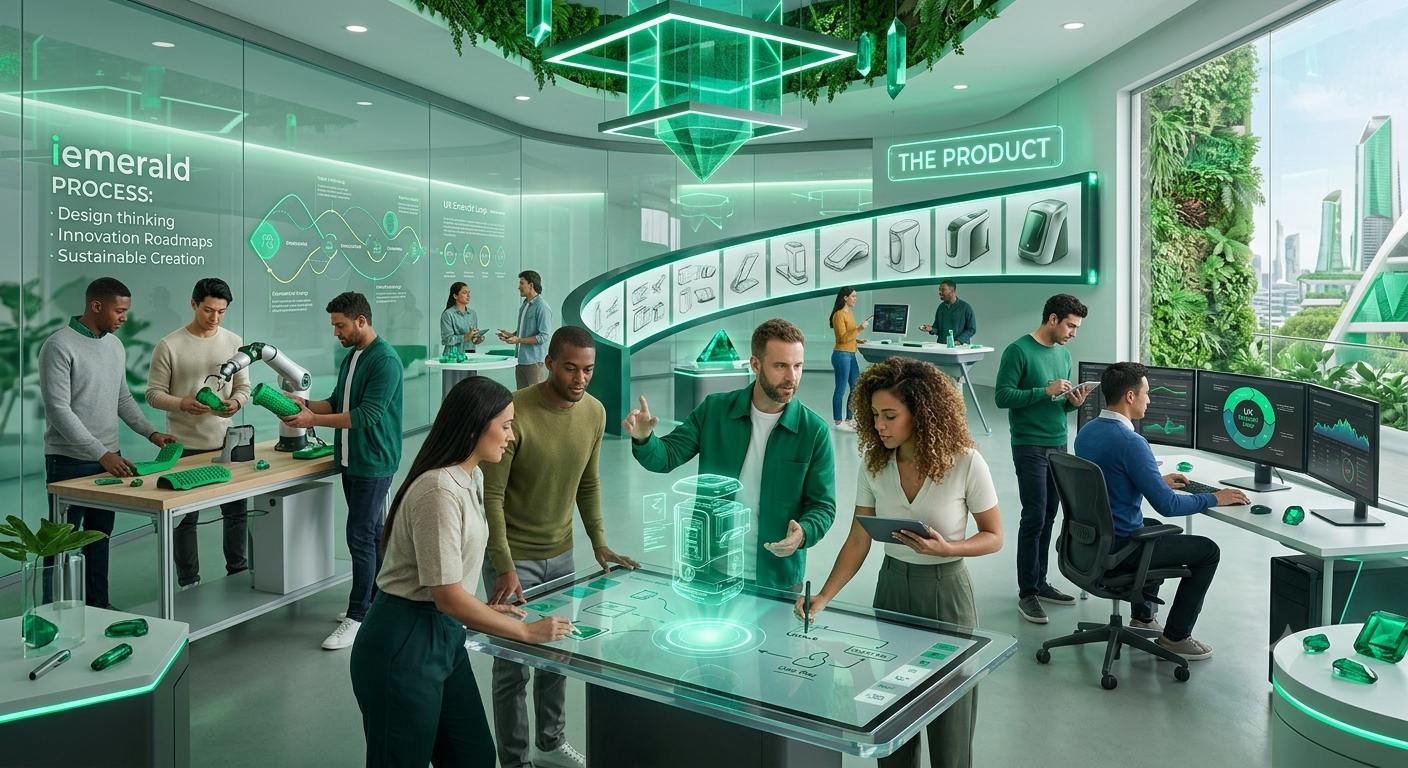
Product creation brings these ideas together by taking a concept through research, ideation, prototyping, testing, refinement, and eventually production or launch. Depending on the specialisation, students may work with physical products, digital products, services, interfaces, systems, or experiences.
Career Opportunities in Design, Innovation & Product Creation
The field offers a wide range of creative and technology-oriented career paths. Some of the major roles include:
- Product Designer
- Industrial Designer
- UX Designer
- UI Designer
- UX Researcher
- Interaction Designer
- Design Strategist
- Service Designer
- Innovation Consultant
- Design Researcher
- Creative Director
- Product Manager
Professionals may work with startups, technology companies, consumer brands, manufacturing organisations, design studios, consulting firms, media companies, or independently as freelancers and entrepreneurs. The exact responsibilities depend on the chosen specialisation and industry.
Career Pathway
The pathway into design and product creation can vary depending on the area you want to specialise in.
For Product and Industrial Design
Students interested in physical products can explore areas such as consumer goods, furniture, automotive products, electronics, lifestyle products, packaging, and manufacturing. Practical prototyping and an understanding of materials and production processes are particularly valuable.
For UX / UI and Digital Product Design
Students interested in technology can work on websites, mobile applications, software platforms, digital services, and other interactive products. Understanding user behaviour and creating simple, accessible, and effective experiences are central to these roles.
For Innovation and Entrepreneurship
Students interested in creating new products, services, or businesses can pursue:
- Bachelor's Degree in Design
- Engineering or Technology
- Business and Management
- Innovation and Entrepreneurship Programs
- Design Thinking and Product Development Courses
- MBA / PGDM in Innovation or Entrepreneurship
This pathway is particularly suitable for students who want to identify problems, develop new ideas, test solutions, and potentially build their own products, startups, or ventures.
Top Colleges and Design Institutes in India
Some of the leading institutes offering programs related to design, product creation, and creative problem-solving include:
- National Institute of Design (NID)
- IIT Bombay – IDC School of Design
- IIT Delhi – Department of Design
- IIT Hyderabad – Department of Design
- IIT Guwahati – Department of Design
- National Institute of Fashion Technology (NIFT)
- Srishti Manipal Institute of Art, Design and Technology
- MIT Institute of Design, Pune
- Pearl Academy
Students should compare institutions based on curriculum, studio facilities, industry exposure, internships, project-based learning, faculty expertise, specialisations, and portfolio development opportunities before choosing a program.
Entrance Exams
Admission requirements vary depending on the institute and design specialisation. Some important entrance examinations include:
- NID DAT — for selected National Institute of Design programs
- UCEED — for undergraduate design programs at participating institutes
- NIFT Entrance Examination — for NIFT programs
- MIT DAT — for MIT Institute of Design programs
- Institute-specific design entrance examinations
- Portfolio and interview-based selection — for selected programs
Design admissions may evaluate more than academic performance. Depending on the institute, candidates may be assessed on creativity, visualisation, observation, problem-solving, design aptitude, communication, portfolio quality, and interview performance.
Salary Range in India
Salaries in design and product creation vary depending on specialisation, portfolio quality, experience, industry, location, and organisation. Indicative annual ranges include:
- Junior UX / UI Designer — ₹4–7 LPA
- Graphic / Visual Designer — ₹3–7 LPA
- Product Designer — ₹5–12 LPA
- Industrial Designer — ₹4–10 LPA
- UX Researcher — ₹5–12 LPA
- Senior Product / UX Designer — ₹10–25 LPA+
Professionals with strong portfolios, specialised expertise, product experience, research capabilities, or leadership skills can command significantly higher compensation. Designers working with technology companies, global brands, consulting organisations, and successful startups may also find strong growth opportunities.
Skills Required
Success in design and product creation requires a combination of creative, analytical, technical, and interpersonal abilities. Important skills include:
- Creative Thinking
- Problem Solving
- Design Thinking
- Visualisation
- User Research
- Communication
- Prototyping
- Attention to Detail
- Collaboration
- Presentation Skills
- Critical Thinking
- Adaptability
A strong portfolio is especially important in many design careers. Students should focus on documenting their design process, showing how they identify problems, explore ideas, create prototypes, test solutions, and improve their final outcomes.
Future Scope
The importance of design is growing as businesses increasingly compete on customer experience, product usability, innovation, and brand differentiation. Digital transformation has also expanded the role of designers beyond traditional creative industries.
Emerging and expanding areas include:
- Digital Product Design
- User Experience and User Research
- Artificial Intelligence Product Design
- Design for Emerging Technologies
- Service Design
- Industrial and Consumer Product Design
- Sustainable Design
- Design Strategy
- Innovation Consulting
- Design Entrepreneurship
- AR / VR Experiences
- Human-Centred Technology
The growing adoption of artificial intelligence, digital products, connected devices, immersive technologies, and sustainable solutions is creating new opportunities for designers who can combine creativity with technology and user-centred thinking.
Is Design, Innovation & Product Creation the Right Career for You?
This career could be a strong choice if you:
- Enjoy creating and experimenting with new ideas
- Like solving problems creatively
- Are curious about how products and experiences are designed
- Enjoy understanding people's needs and behaviour
- Have strong observation skills
- Enjoy sketching, visualising, making, or prototyping
- Like working with technology and creative tools
- Enjoy teamwork and presenting ideas
- Are willing to learn continuously and adapt to new technologies
However, design is not simply about drawing or having artistic talent. Professional designers need to understand users, research problems, communicate ideas, accept feedback, work within constraints, and repeatedly improve their solutions. Students should be comfortable with experimentation, criticism, and an iterative creative process.
Final Thoughts
Design, Innovation & Product Creation bring creativity and problem-solving together to create products, services, and experiences that can make a meaningful difference. Whether you want to become a product designer, UX designer, industrial designer, design researcher, innovation professional, or entrepreneur, there are multiple pathways to explore.
As businesses increasingly focus on customer experience, digital products, sustainability, technology, and innovation, the demand for professionals who can understand problems and transform ideas into practical solutions is expected to remain strong. If you are looking for a career that combines creativity, technology, research, and real-world problem-solving, Design, Innovation & Product Creation could be the right path for you.