For many students, aviation is synonymous with becoming a pilot. While flying an aircraft is undoubtedly one of the most exciting careers in the industry, aviation is much broader than that. It is a dynamic sector that offers opportunities in engineering, airport operations, air traffic management, aircraft maintenance, cabin services, logistics, safety, and aviation management.
With the rapid growth of air travel, expanding airport infrastructure, and increasing demand for skilled professionals, aviation has become one of the fastest-growing career sectors in India and across the world.
If you're fascinated by aircraft, travel, technology, and working in a fast-paced environment, a career in aviation could be the perfect fit.
What is Aviation?
Aviation is the industry that deals with the design, operation, maintenance, management, and regulation of aircraft and airports. It includes both commercial aviation, where airlines transport passengers and cargo, and general aviation, which covers private aircraft, helicopters, business jets, and emergency services.
The industry combines advanced technology, strict safety standards, teamwork, and excellent communication, making it one of the most exciting professional fields to work in.

Career Opportunities in Aviation
One of the biggest advantages of aviation is the wide variety of career paths available. Some of the most popular roles include:
- Commercial Pilot
- Airline Captain
- Cabin Crew (Air Hostess / Flight Steward)
- Aircraft Maintenance Engineer (AME)
- Air Traffic Controller (ATC)
- Airport Operations Manager
- Ground Staff Executive
- Aviation Safety Officer
- Flight Dispatcher
- Cargo and Logistics Manager
- Airport Manager
- Aviation Security Officer
- Aviation Management Professional
Each role contributes to ensuring that flights operate safely, efficiently, and on schedule. While pilots are responsible for flying the aircraft, engineers maintain it, air traffic controllers guide it through the skies, and airport teams ensure smooth passenger experiences.
Career Pathway
The pathway depends on the career you choose.
For Commercial Pilots
Students interested in becoming airline pilots must complete the required flying hours at a DGCA-approved flying training organization before applying to airlines.
For Aircraft Maintenance Engineering (AME)
For Aviation Management
Students can pursue:
- BBA in Aviation
- B.Sc. Aviation
- BBA Airport Management
- MBA Aviation Management (after graduation)
These courses prepare students for managerial and operational roles within airlines and airports.
Top Colleges and Aviation Institutes in India
Some of the leading institutes offering aviation-related education include:
- Indira Gandhi Rashtriya Uran Akademi (IGRUA)
- Rajiv Gandhi National Aviation University (RGNAU)
- Bombay Flying Club
- Indira Gandhi Institute of Aeronautics
- Hindustan Institute of Technology and Science
- UPES, Dehradun
- Amity University
- University of Petroleum and Energy Studies (UPES)
- DGCA-approved Flying Training Organizations (FTOs)
For Aircraft Maintenance Engineering, students should always choose institutes approved by the Directorate General of Civil Aviation (DGCA).
Entrance Exams
Different aviation careers have different admission processes. Some common entrance examinations include:
- DGCA examinations (for pilot licensing)
- IGRUA Entrance Examination
- CUET-UG (for some aviation degree programs)
- JEE Main (for certain engineering-related aviation programs)
- University-specific entrance tests
- Airline recruitment assessments and aptitude tests
For pilots, candidates must also clear mandatory medical examinations, eyesight standards, and fitness requirements before obtaining licenses.
Salary Range in India
Salaries in aviation vary significantly depending on the role, qualification, and experience. Typical salary ranges include:
- Ground Staff — ₹3–5 LPA
- Cabin Crew — ₹4–8 LPA
- Aircraft Maintenance Engineer — ₹5–10 LPA
- Airport Operations Executive — ₹4–8 LPA
- Commercial Pilot (First Officer) — ₹12–30 LPA
- Experienced Airline Captain — ₹40 LPA to ₹1 Crore+ annually
International airlines often offer significantly higher compensation packages, especially for experienced pilots and aviation specialists.
Skills Required
Success in aviation requires more than technical knowledge. Employers value professionals who possess:
- Strong communication skills
- Teamwork and coordination
- Decision-making under pressure
- Problem-solving ability
- Situational awareness
- Discipline and professionalism
- Physical and mental fitness
- Customer service skills
- Technical aptitude
- Leadership and responsibility
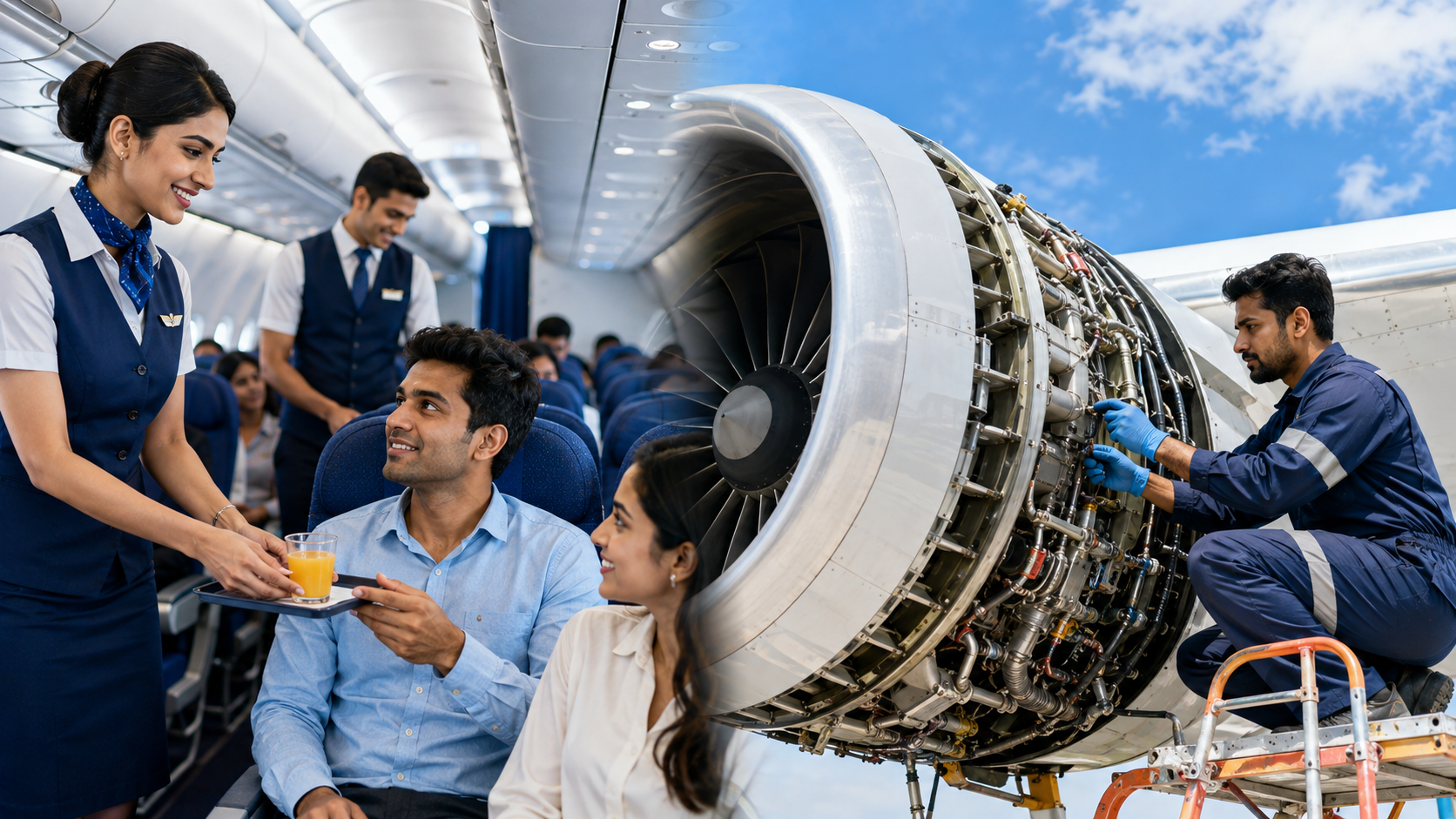
Since aviation is a safety-critical industry, attention to detail and adherence to procedures are essential.
Future Scope
India is one of the fastest-growing aviation markets in the world. Rising incomes, increasing domestic travel, government initiatives to improve regional connectivity, and the development of new airports are creating strong demand for aviation professionals.
Beyond passenger airlines, opportunities are expanding in:
- Cargo and logistics aviation
- Business aviation
- Helicopter services
- Drone operations
- Aircraft manufacturing
- Airport infrastructure development
- Aviation safety and compliance
- Sustainable aviation technologies
The growing use of drones, electric aircraft research, artificial intelligence in air traffic management, and digital airport operations are also opening new career avenues for future professionals.
Is Aviation the Right Career for You?
Aviation could be an excellent career choice if you:
- Love aircraft and modern technology
- Enjoy travelling and working in dynamic environments
- Can remain calm under pressure
- Have strong communication and teamwork skills
- Are disciplined and responsible
- Don't mind working in shifts, weekends, or holidays
However, some aviation careers involve demanding schedules, frequent travel, rigorous training, and strict medical or licensing requirements. It's important to understand these commitments before choosing this path.
Final Thoughts
Aviation is much more than flying airplanes—it's an industry powered by thousands of skilled professionals working together to keep the world connected. Whether you dream of becoming a commercial pilot, maintaining advanced aircraft, managing airport operations, or ensuring passenger safety, there are numerous rewarding career paths to explore.
With India's aviation sector continuing to grow and embrace new technologies, the future looks promising for students willing to invest in the right education, training, and skills. If you're looking for a career that combines excitement, responsibility, technology, and global opportunities, aviation might just be the runway to your success.