Have you ever looked up at the night sky and wondered how stars are born, what black holes really are, or whether life exists beyond Earth? If questions like these excite you, a career in Astronomy and Space Sciences might be the perfect path to explore.
Astronomy is one of humanity's oldest sciences, but it has evolved into one of the most advanced and technology-driven fields today. Modern astronomers don't just observe stars through telescopes—they use satellites, supercomputers, space probes, artificial intelligence, and massive observatories to study planets, galaxies, dark matter, and the origins of the universe.
With growing investments in space exploration by organizations like ISRO, NASA, ESA, and private companies such as SpaceX and Blue Origin, opportunities in Space Sciences are expanding like never before.
If you're passionate about Physics, Mathematics, technology, and solving the mysteries of the universe, Astronomy could offer an intellectually rewarding and inspiring career.
What is Astronomy and Space Science?
Astronomy is the scientific study of celestial objects such as stars, planets, moons, galaxies, black holes, comets, and the universe as a whole. Space Science is a broader field that includes astronomy, astrophysics, planetary science, satellite technology, space exploration, and space missions.
Professionals in this field use scientific observations, mathematical models, computer simulations, and advanced instruments to understand how the universe works and how celestial bodies evolve over time.
Although many people imagine astronomers spending nights looking through telescopes, much of today's research involves analyzing data collected by space telescopes, satellites, and observatories using sophisticated software and computing tools.
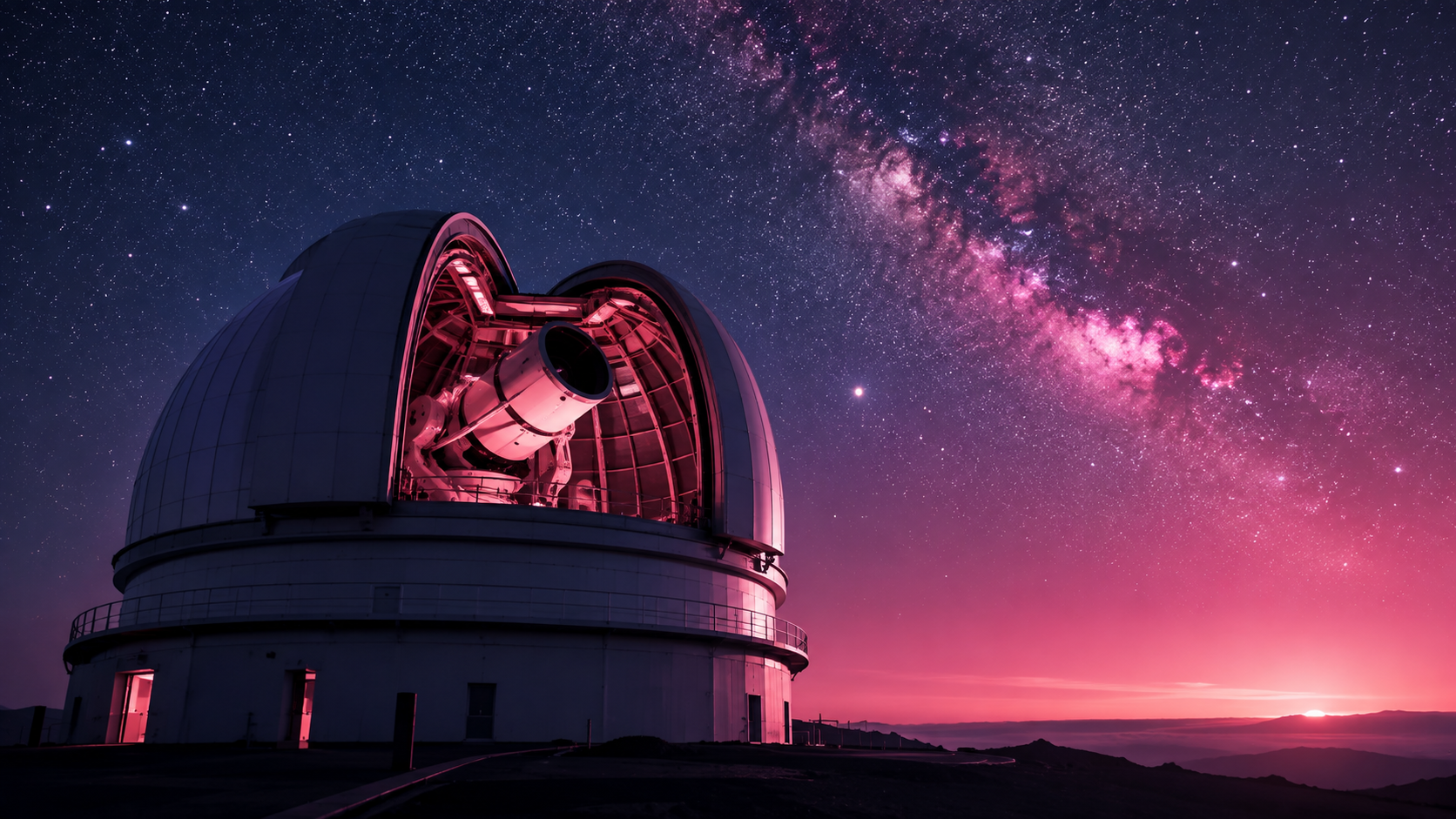
What Does an Astronomer or Space Scientist Do?
Depending on their specialization, professionals may:
- Study stars, planets, and galaxies
- Analyze telescope and satellite data
- Conduct research on black holes and dark matter
- Develop computer models of the universe
- Work on satellite missions and space exploration projects
- Design scientific instruments for observatories
- Study planetary atmospheres and exoplanets
- Collaborate with engineers on space missions
- Publish scientific research papers
- Teach and mentor students at universities
Many professionals spend a significant amount of time working with data, programming, simulations, and scientific research rather than observing the sky directly.
Career Pathway
Students interested in Astronomy usually begin with a strong foundation in Physics and Mathematics.
A common pathway is:
Since Astronomy is largely research-oriented, many advanced positions require postgraduate studies and often a Ph.D. However, engineering graduates can also contribute to space missions through satellite development, instrumentation, software, and aerospace technologies.
Popular Courses
Students can pursue various undergraduate and postgraduate programs, including:
- B.Sc. Physics
- B.Sc. Astronomy
- B.Tech Aerospace Engineering
- B.Tech Electronics Engineering
- B.Tech Computer Science (for computational astronomy)
- M.Sc. Astronomy
- M.Sc. Astrophysics
- M.Sc. Space Science
- M.Tech Aerospace Engineering
- Ph.D. in Astronomy or Astrophysics
A strong background in Physics, Mathematics, programming, and data analysis is highly beneficial for success in this field.
Top Colleges and Institutes in India
Some of India's leading institutions for Astronomy and Space Sciences include:
- Indian Institute of Science (IISc), Bengaluru
- Indian Institute of Astrophysics (IIA), Bengaluru
- Indian Institute of Space Science and Technology (IIST), Thiruvananthapuram
- Tata Institute of Fundamental Research (TIFR), Mumbai
- Inter-University Centre for Astronomy and Astrophysics (IUCAA), Pune
- Physical Research Laboratory (PRL), Ahmedabad
- IITs offering Physics and Aerospace programs
- IISERs (Indian Institutes of Science Education and Research)
- Delhi University
- Banaras Hindu University (BHU)
Many students also pursue higher studies abroad at globally renowned universities specializing in astrophysics and space research.
Entrance Exams
Admission depends on the course and institution. Some commonly accepted entrance examinations include:
- JEE Main & JEE Advanced (for engineering programs)
- IAT (IISER Aptitude Test) — for admission to IISERs
- CUET-UG (for certain universities)
- University-specific entrance examinations
- GATE (for postgraduate engineering)
- Joint Entrance Screening Test (JEST) — for selected postgraduate and research programs
Many research institutes also conduct their own entrance examinations or interviews for postgraduate and doctoral admissions.
Salary Range in India
Salaries depend on qualifications, employer, research experience, and specialization. Typical salary ranges include:
- Research Assistant — ₹4–7 LPA
- Junior Scientist — ₹6–10 LPA
- Research Scientist — ₹8–15 LPA
- Space Scientist (Government Organizations) — ₹10–18 LPA
- Senior Researcher or Professor — ₹18–35+ LPA
Professionals working in international research organizations, space agencies, or advanced technology companies may earn significantly higher salaries depending on their expertise and experience.
Career Roles
Astronomy and Space Science graduates can pursue careers such as:
- Astronomer
- Astrophysicist
- Space Scientist
- Planetary Scientist
- Cosmologist
- Research Scientist
- Observatory Scientist
- Satellite Systems Engineer
- Space Mission Analyst
- Aerospace Research Engineer
- Data Scientist (Astronomical Research)
- University Professor
- Scientific Software Developer
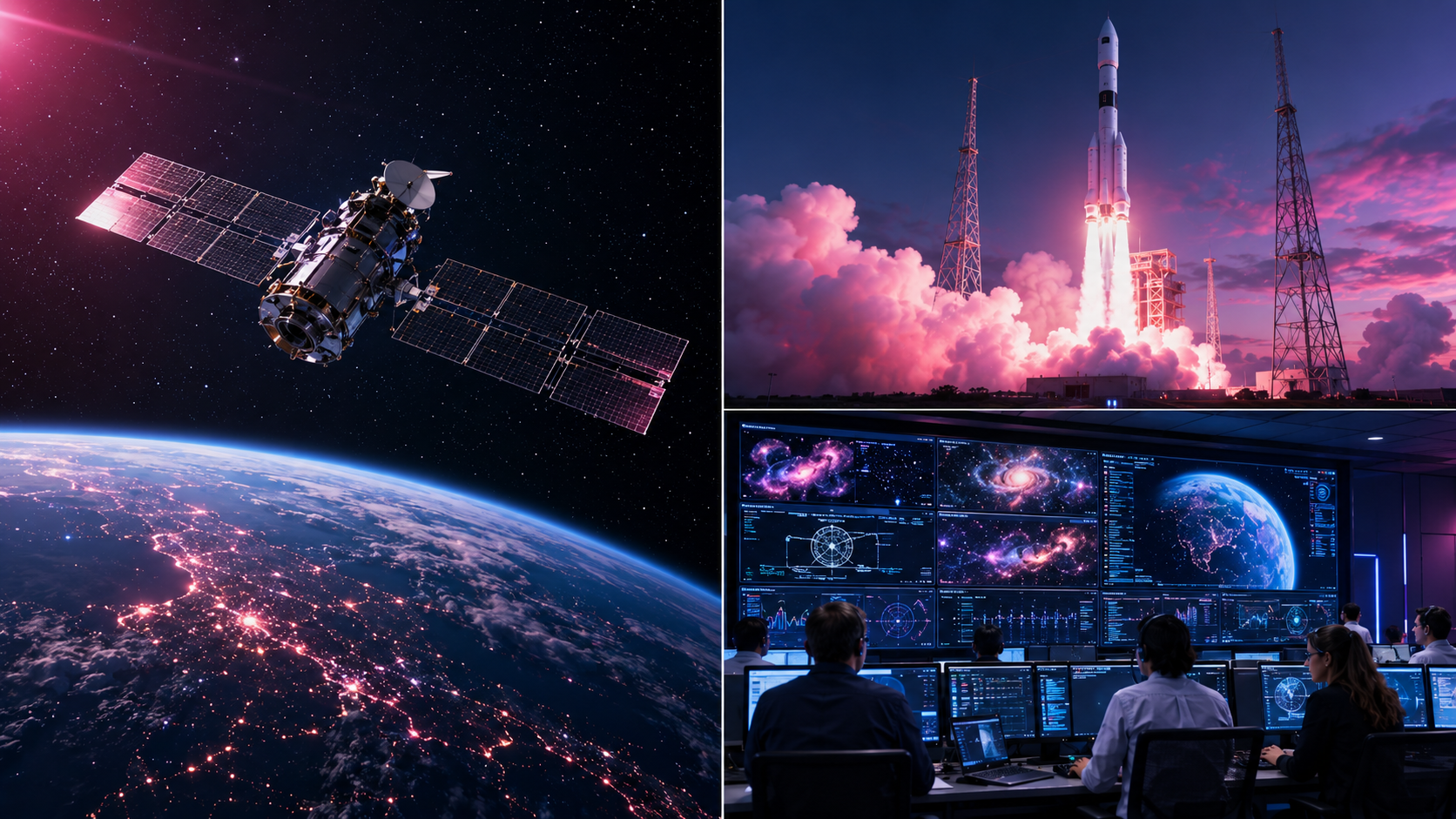
While research remains the primary career path, opportunities are also expanding in aerospace, satellite technology, scientific computing, and space startups.
Skills Required
To succeed in Astronomy and Space Sciences, students should develop a combination of scientific, analytical, and technical skills, including:
- Strong Physics knowledge
- Advanced Mathematics
- Logical and analytical thinking
- Programming (Python, C++, MATLAB)
- Data analysis
- Scientific research skills
- Curiosity and patience
- Critical thinking
- Problem-solving ability
- Communication and teamwork
Research often involves analyzing enormous datasets, so computational skills are becoming increasingly valuable.
Future Scope
The future of Astronomy and Space Sciences is brighter than ever. Governments and private companies around the world are investing heavily in satellite technology, lunar exploration, Mars missions, deep-space telescopes, reusable rockets, and space-based communication systems.
India's growing space sector, expanding commercial space industry, and increasing participation of private aerospace startups are creating exciting opportunities for scientists, engineers, software developers, and researchers.
Emerging areas such as space robotics, satellite analytics, planetary exploration, radio astronomy, space-based AI, astrophysical simulations, and commercial space technology are expected to generate significant career opportunities in the coming decades.
Although Astronomy is a competitive and research-intensive field, it offers unmatched opportunities for those driven by curiosity and a passion for discovery.
Is Astronomy the Right Career for You?
This career could be an excellent fit if you:
- Love Physics and Mathematics
- Are fascinated by space and the universe
- Enjoy scientific research and experimentation
- Have strong analytical and problem-solving skills
- Are patient and willing to pursue higher education
- Enjoy learning continuously and exploring unanswered questions
However, if you're looking for quick employment after graduation or prefer careers with minimal academic research, you may want to explore other science and technology fields.
Final Thoughts
Astronomy and Space Sciences is a career built on curiosity, innovation, and the desire to understand the universe. From discovering distant galaxies to contributing to satellite missions and space exploration, professionals in this field help expand humanity's knowledge beyond Earth.
For students who are passionate about science, mathematics, and exploration, Astronomy offers an intellectually challenging and deeply rewarding career. As global investments in space technology continue to rise, the opportunities to contribute to groundbreaking discoveries have never been greater. If you've ever dreamed of uncovering the secrets of the cosmos, this could be the career that takes your ambitions beyond the stars.